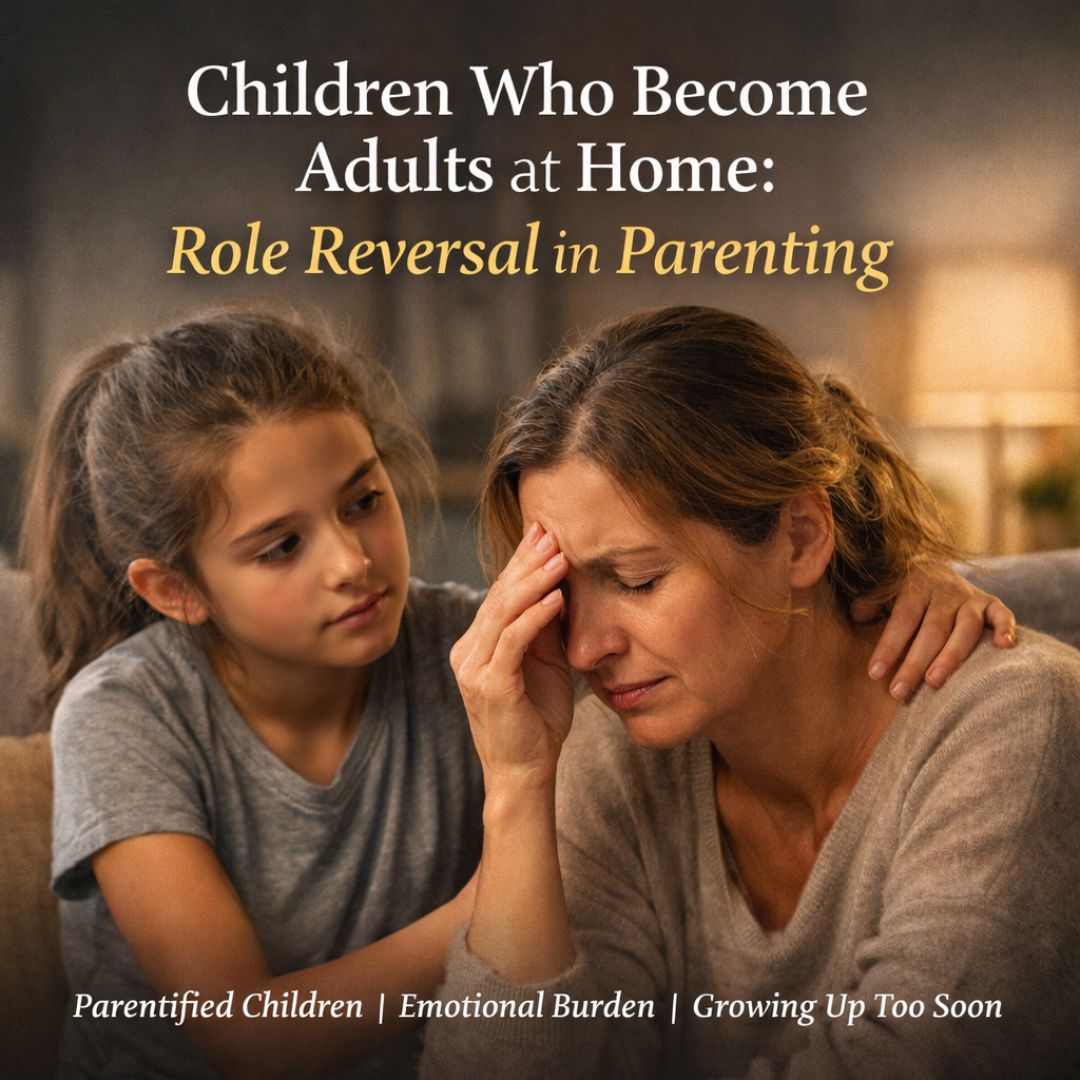
Some children learn very early how to read a room.
They notice when a parent is stressed, upset, or overwhelmed. They adjust their behaviour, lower their needs, and try not to add to the tension. Over time, they may become the calm one, the responsible one, the one who “understands.”
From the outside, these children often look mature for their age. Inside, they are carrying more than they should.
This blog explores role reversal in anxious parenting, how children slowly take on adult emotional roles, why it happens, and how it can shape them long after childhood.
What Role Reversal Really Means
Role reversal happens when a child begins meeting the emotional needs of a parent instead of the other way around.
This doesn’t always involve obvious responsibilities like cooking or managing siblings. More often, it shows up emotionally. The child becomes a listener, a comforter, a mediator, or a stabilising presence when the parent feels anxious or distressed.
The child is not asked directly. They step into the role because they sense it is needed.
How Anxious Parenting Contributes to This Pattern
Parents who live with high anxiety are often preoccupied with worry, fear, or emotional overwhelm.
They may lean on their child for reassurance, overshare adult concerns, or become emotionally dysregulated in ways the child feels responsible for soothing. Even when unintentional, the message the child absorbs is: my parents need me to be okay so they can be okay.
The child learns to stay alert, helpful, and emotionally contained.
What This Feels Like for the Child
Children in these roles often feel proud of being “good” or “strong.” But they may also feel tense, tired, or quietly lonely.
They may suppress their own emotions to avoid upsetting the parent. They may feel guilty for having needs. They may worry constantly about things beyond their control.
Because this happens gradually, the child may never realise something is missing.
Why This Is Often Praised, Not Noticed
Role-reversed children are often described as mature, responsible, or wise beyond their years.
They rarely cause trouble. They may do well in school, help at home, and manage themselves efficiently. Because of this, their emotional burden is often overlooked.
What isn’t seen is the cost of growing up too early.
How This Pattern Shows Up in Adulthood
Adults who were emotionally parentified as children often continue similar patterns later in life.
They may feel responsible for other people’s emotions. They may struggle to ask for help or rest. They may choose relationships where they are the caretaker rather than an equal partner.
Even when life feels stable, there can be a lingering sense of pressure or hyper-responsibility.
Why This Isn’t About Blaming Parents
Most parents who rely on their children emotionally are not trying to harm them.
They may be overwhelmed, unsupported, or dealing with anxiety they don’t know how to manage. The role reversal happens quietly, through emotional dynamics rather than intention.
Understanding this pattern is not about blame. It’s about recognising how children adapt to survive emotionally.
What Helps Heal Role Reversal
Healing begins when responsibility shifts back to where it belongs.
Children and later adults need experiences where they are allowed to have needs without managing someone else’s emotions. They need relationships where care flows both ways, not just outward.
Therapeutic support can help individuals recognise these patterns, soften hyper-responsibility, and relearn what it feels like to be supported.
When to Seek Support
Support may be helpful when someone feels chronically responsible for others, struggles with guilt when prioritising themselves, or feels anxious when not “holding things together.”
These signs often point back to early role reversal that still shapes present-day behaviour.
Conclusion
Children are not meant to be the emotional anchors of their homes.
When anxiety shifts adult responsibility onto a child, that child learns to grow up too fast. While this adaptation may look like strength, it often comes with hidden emotional costs.
With awareness, compassion, and support, these patterns can be understood and gently undone. If you recognise these experiences in yourself or your family, SoulNirvana offers a safe, reflective space through its Comprehensive Parenting Support Program. If it feels right, you can book a session now and begin restoring balance where it was lost.
FAQs
Q1. Is role reversal the same as helping out at home?
No. Helping is healthy. Role reversal happens when a child becomes emotionally responsible for a parent.
Q2. Can this affect someone even if childhood felt “okay”?
Yes. Many people don’t recognise the impact until adulthood.
Q3. Why do these children seem so mature?
Because they learned early to manage emotions and situations beyond their age.
Q4. Can these patterns change later in life?
Yes. With support and safe relationships, people can relearn healthier roles.
References
Chase, N. D. (1999). Burdened Children: Theory, Research, and Treatment of Parentification.
https://psycnet.apa.org/record/1999-02343-000
Hooper, L. M. (2007). The application of attachment theory and family systems theory to the phenomenon of parentification.
https://psycnet.apa.org/record/2007-05087-007
National Child Traumatic Stress Network. Understanding child stress and family dynamics.
Siegel, D. J. The Developing Mind.
https://drdansiegel.com/books/the-developing-mind/
UNICEF. Parenting, stress, and child well-being.
https://www.unicef.org/parenting