
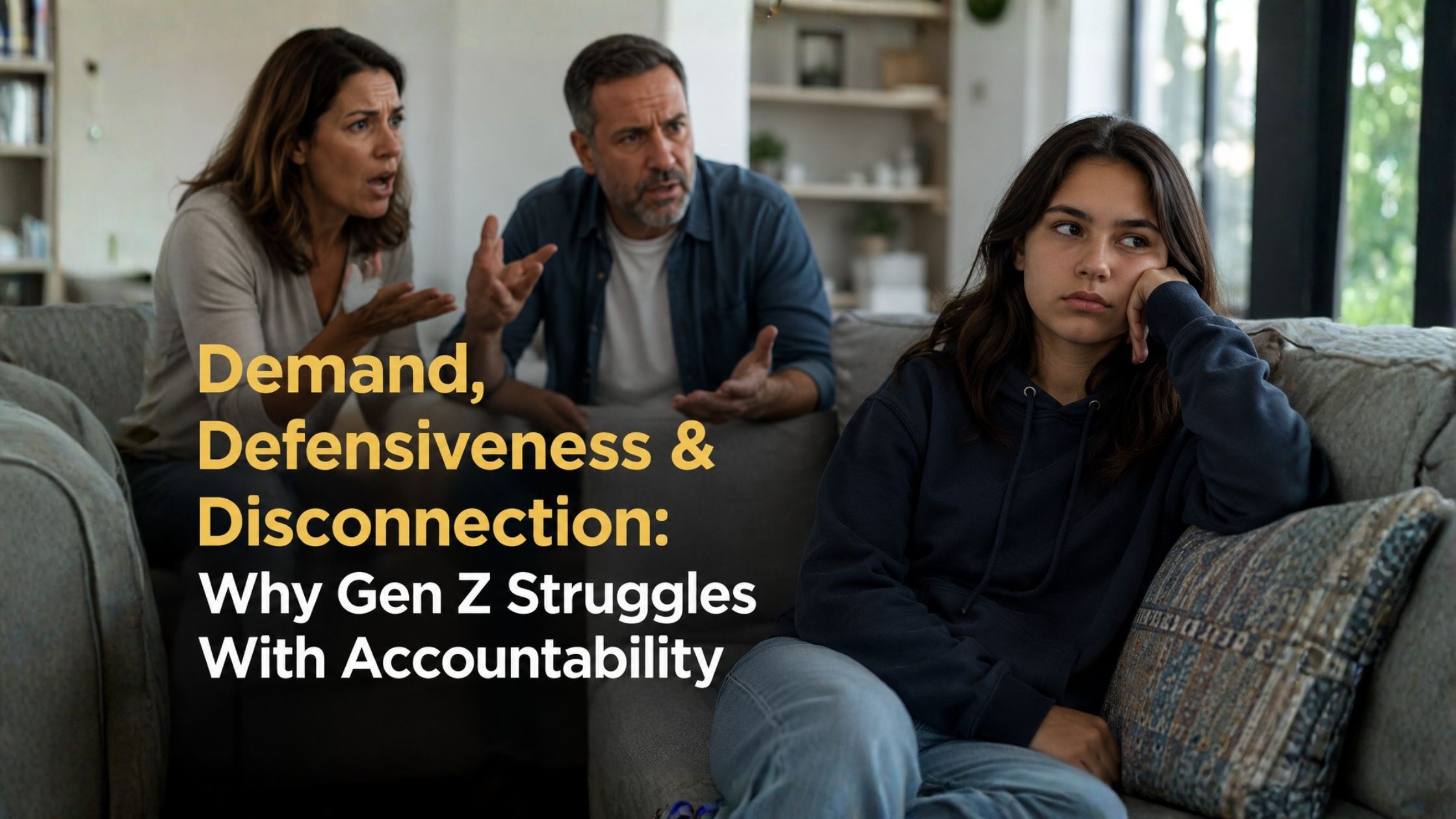
Gen Z is often described as emotionally aware, expressive, and socially conscious.
They talk openly about mental health, boundaries, burnout, identity, and emotional well-being in ways earlier generations rarely did at the same age. They are informed, articulate, and deeply aware of how words and behaviour affect people.
And yet, alongside this awareness, there is another pattern that many people quietly notice difficulty handling criticism, defensiveness during conflict, and emotional withdrawal when accountability enters the conversation.
This doesn’t mean Gen Z lacks intelligence or values. The picture is more layered than that.
The Difference Between Awareness and Emotional Capacity
Being emotionally aware and being emotionally regulated are not always the same thing.
Many young adults today can identify emotional concepts very well. They know the language of trauma, boundaries, validation, and self-care. But understanding emotions intellectually is different from tolerating discomfort emotionally.
Accountability often feels uncomfortable because it triggers shame, embarrassment, or fear of rejection. And when emotions feel overwhelming, defensiveness becomes protection.
Why Accountability Feels Personal
For many Gen Z individuals, feedback doesn’t always feel like feedback. It can feel like a judgment of identity.
A simple correction may internally sound like:
- I’m failing.
- I’m being rejected.
- I’m not good enough.
This is why some reactions appear bigger than the situation itself. The emotional response is not always to the event, it’s to what the event represents internally.
The Role of Online Culture

Social media has shaped emotional behaviour more than we realise.
Online spaces reward performance, instant opinions, and public validation. Mistakes are often visible, screenshotted, judged, or discussed publicly. This creates a quiet fear of “getting it wrong.”
Over time, criticism can start feeling threatening instead of constructive.
Defensiveness then becomes a shield against humiliation or exposure.
Why Defensiveness Leads to Disconnection
When accountability feels unsafe, many people respond by emotionally shutting down.
Some avoid difficult conversations. Others become argumentative, sarcastic, or distant. Some disappear completely when conflict arises.
This creates disconnection in relationships, friendships, and workplaces. The issue is often not unwillingness to care, it’s difficulty staying emotionally present during discomfort.
The Pressure of Always Needing to “Know Better”
Gen Z also carries the pressure of being highly informed.
There’s an expectation to be emotionally intelligent, socially aware, politically correct, productive, and self-aware all at once. Because of this, mistakes can feel deeply exposing.
Admitting fault may feel less like a normal human experience and more like proof of failure.
This can make vulnerability harder than confidence.
What Accountability Actually Means
Accountability is not self-punishment.
It’s the ability to recognise impact, reflect honestly, and take responsibility without collapsing into shame. Healthy accountability allows growth without destroying self-worth.
It says:
- I made a mistake.
- not
- I am a mistake.
That difference matters.
Why Shame Often Sits Underneath Defensiveness
Many defensive reactions are rooted in shame rather than arrogance.
When someone feels emotionally secure, they are more able to hear feedback without becoming reactive. But when self-worth already feels fragile, accountability can feel emotionally dangerous.
This is why criticism often triggers protection before reflection.
What Helps Build Emotional Accountability
Accountability grows in environments where mistakes are survivable.
People become more open to reflection when they don’t fear humiliation, rejection, or emotional attack. Calm conversations, emotional safety, and modelling accountability by adults and leaders all help.
It’s also important to separate behaviour from identity. A person can make a poor choice without being a bad person.
The Bigger Picture
Gen Z is not disconnected because they don’t care.
In many cases, they care deeply, sometimes so deeply that criticism feels overwhelming. The challenge is learning how to stay emotionally grounded even when discomfort appears.
That balance between sensitivity and responsibility is where emotional maturity begins.
Conclusion
Gen Z is growing up in a world that is emotionally louder, faster, and more publicly critical than before. Awareness has increased, but emotional resilience is still catching up.
Defensiveness is often not about ego, it’s about protection. Understanding that can create more compassionate conversations around accountability, growth, and connection.
If you find yourself struggling with criticism, emotional shutdown, or relationship disconnection, SoulNirvana offers a supportive space through its Psychological Counselling services.
If it feels right, you can book a session now and begin exploring healthier ways to navigate emotions, feedback, and connection.
FAQs
Q1. Why does Gen Z seem more defensive than earlier generations?
Many factors contribute, including online culture, public criticism, emotional overwhelm, and identity-based self-worth.
Q2. Is defensiveness always unhealthy?
Not always. It’s often a protective response, but it can become harmful if it blocks reflection and communication.
Q3. Why does criticism feel so personal today?
Because identity and self-worth are often deeply tied to performance, image, and social validation.
Q4. Can accountability be learned without shame?
Yes. Healthy accountability focuses on growth and responsibility, not humiliation.
References
American Psychological Association. Emotional regulation and young adults.
Pew Research Center. Gen Z, identity, and social behaviour.
Twenge, J. M. iGen: Why Today’s Super-Connected Kids Are Growing Up Less Rebellious.
World Health Organization. Youth mental health and emotional resilience.