
Gen Z: Brilliant Minds, Fragile Confidence?
15 Jun 2026
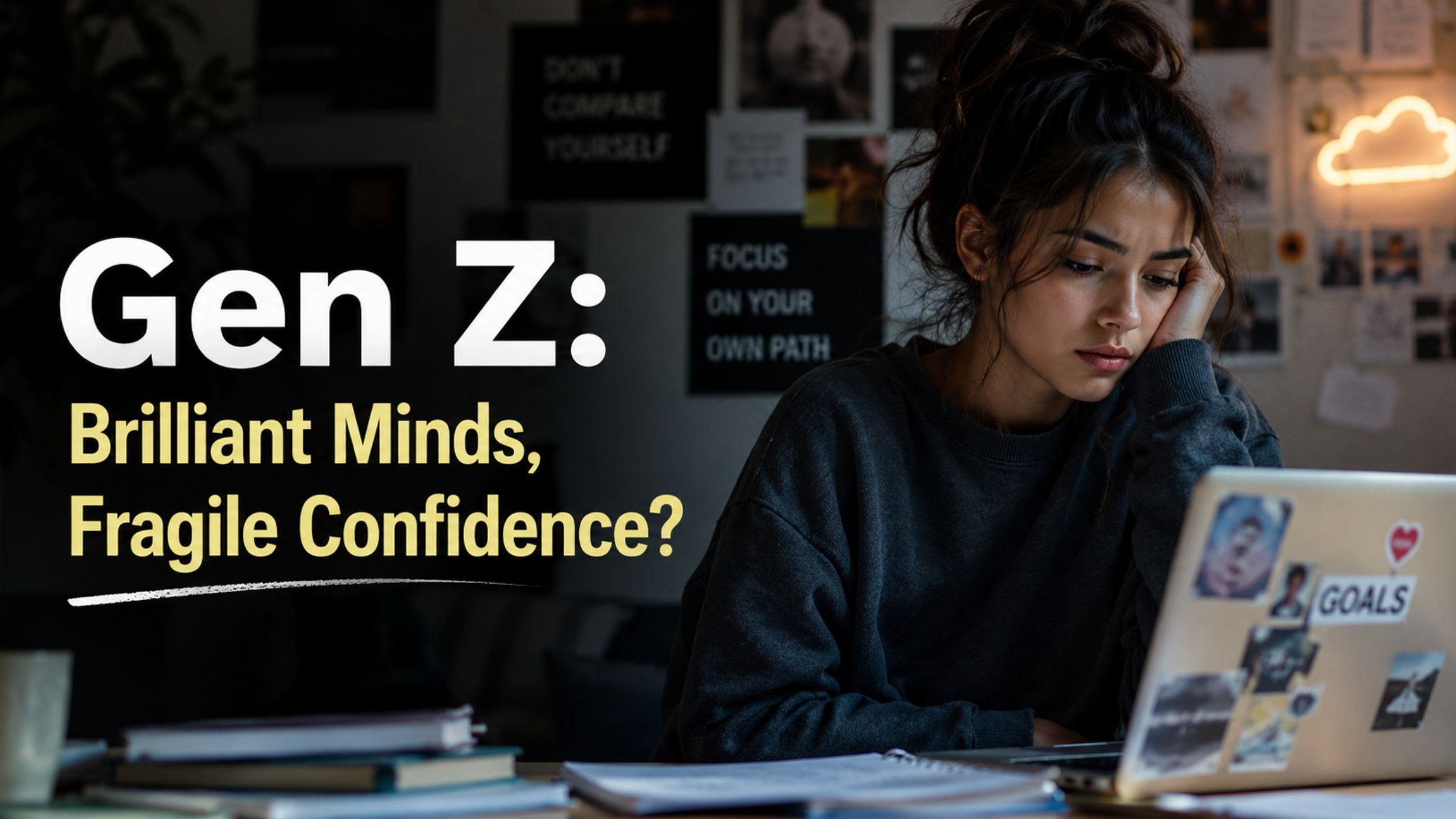
If intelligence alone guaranteed confidence, Gen Z would probably be one of the most self-assured generations in history.
This is a generation that has grown up with unlimited access to information. They can learn a new skill through a video, understand global issues with a few clicks, build businesses from their bedrooms, and openly discuss topics that previous generations often avoided. They are curious, creative, adaptable, and incredibly quick to learn.
Yet, many of them quietly carry a question they rarely say out loud: "Am I actually good enough?"
It's an interesting contradiction. A generation that appears bold online often struggles with self-doubt offline. Behind confidence in opinions, there can be uncertainty about identity. Behind ambition, there can be fear of failure. Behind achievements, there can be the constant feeling of not doing enough.
So why does this happen? The answer is far more complex than simply saying Gen Z lacks confidence.
Growing Up in a World That Never Stops Comparing
Every generation has experienced comparison in some form. Parents compared siblings. Schools compared marks. Workplaces compared performance.
But Gen Z experiences comparison every single day, often without choosing it.
Open any social media platform and within minutes you'll see someone launching a business at twenty-one, someone travelling the world, someone getting engaged, someone buying a house, someone graduating from a prestigious university, and someone talking about earning more money than most people twice their age.
The mind knows these are carefully selected moments, but emotions don't always make that distinction.
Instead of asking, "What do I want?" many young people begin asking, "Why am I not there yet?" Confidence slowly shifts from being built internally to being measured against someone else's highlight reel.
Knowing More Doesn't Always Mean Feeling Better

One of Gen Z's greatest strengths is awareness.
They understand mental health better than many generations before them. They know about boundaries, burnout, emotional regulation, trauma, attachment styles, and self-care. They are more open to conversations about therapy and emotional well-being.
But awareness has its own challenges. Sometimes, knowing more creates more pressure.
A young person may recognise they are overthinking but still struggle to stop. They may understand perfectionism but continue chasing impossible standards. They may know why they feel anxious while still finding it difficult to calm their mind.
Information creates understanding. It doesn't automatically create emotional resilience.
When Every Choice Feels Like It Could Change Your Future
Previous generations often followed more predictable paths. Education led to work. Work led to stability. Life moved through relatively defined stages. Today's young adults face an entirely different reality.
There are countless career options, different ways of earning money, opportunities to work remotely, start businesses, switch industries, build personal brands, or create content online.
While this freedom is exciting, it also comes with pressure. When there are endless possibilities, every decision begins to feel incredibly important.
"What if I choose the wrong career?"
"What if everyone else figures life out before I do?"
"What if I waste my twenties?"
The abundance of choice can create paralysis instead of confidence.
The Need to Be Exceptional
Many Gen Z individuals don't just want to succeed. They feel they need to be extraordinary.
Doing an average job often doesn't feel enough. There is pressure to build something meaningful, stay relevant, keep learning, maintain an online presence, look after physical health, protect mental health, have fulfilling relationships, and still somehow find time for hobbies and personal growth.
It's exhausting. The bar keeps moving, and no matter how much is achieved, it rarely feels complete. When success becomes a moving target, confidence struggles to catch up.
Why Validation Has Become So Powerful
Human beings have always wanted acceptance. What's different today is the speed at which validation arrives—or doesn't.
A post receives fewer likes than expected. A message is left on "seen." Someone else gets recognised at work.
A friend seems closer to someone else. These moments may appear small, but they quietly influence how people see themselves.
External validation becomes easier to access, but also easier to lose. Over time, confidence begins depending on responses that are outside one's control.
Confidence and Self-Worth Are Not the Same Thing
One of the biggest misconceptions is that confidence and self-worth are identical.
They're not.
Confidence is often about believing you can do something.
Self-worth is believing you still have value even when things don't go as planned.
Many Gen Z individuals appear confident while performing well. They speak confidently about their work, studies, or ideas.
But when they make a mistake, face rejection, or experience failure, their entire sense of self can feel shaken.
This is because confidence built only on achievement becomes fragile.
Healthy self-worth is much steadier. It survives both success and disappointment.
The Quiet Fear of Not Living Up to Potential
Ask many young adults what worries them most, and you'll often hear a version of the same fear.
"I'm scared of wasting my potential."
It's a heavy thought to carry. Instead of enjoying the process of learning and growing, many feel they are constantly being measured against the person they could become.
Every setback begins to feel like falling behind. Every pause feels like losing momentum.
Every mistake feels more permanent than it really is. The pressure to fulfil potential can become so overwhelming that it prevents people from taking risks at all.
Ironically, fear of failure often stops growth long before failure itself does.
Building Confidence in a Different Way
Real confidence doesn't come from always succeeding. It comes from discovering that you can survive setbacks without losing yourself.
It grows when people stop seeing mistakes as evidence that they aren't capable and start seeing them as part of learning.
It grows through keeping promises to yourself, trying again after disappointment, asking for help when needed, and accepting that growth is rarely linear.
Confidence is built through experience, not perfection.
And perhaps most importantly, it grows when self-worth is no longer tied to productivity, popularity, or constant achievement.
Closing Thoughts
Gen Z is often described as ambitious, emotionally aware, and intellectually curious—and rightly so. But beneath those strengths, many young people are carrying an invisible pressure to always be improving, achieving, and proving themselves.
The answer isn't to become less ambitious. It's to remember that your worth was never meant to depend entirely on what you achieve.
Success can build confidence, but it shouldn't be the only thing holding it together.
If you've been feeling like you're constantly questioning yourself despite working hard, learning, and trying your best, know that you're not alone. Sometimes confidence isn't missing—it has simply become buried under comparison, pressure, and unrealistic expectations.
At SoulNirvana, our Psychological Counselling services offer a supportive space to explore self-worth, identity, confidence, and the emotional pressures that many young adults experience today. If you're ready to understand yourself beyond achievements and expectations, we're here to walk that journey with you.
FAQs
Q1. Why does Gen Z struggle with confidence despite being highly educated?
Knowledge and confidence are different. While Gen Z has access to more information than ever before, confidence is built through experience, emotional resilience, and self-acceptance, not information alone.
Q2. Does social media really affect confidence?
For many people, yes. Constant exposure to curated versions of other people's lives can lead to comparison, self-doubt, and unrealistic expectations.
Q3. What's the difference between confidence and self-worth?
Confidence is believing you can do something well. Self-worth is believing you have value regardless of success or failure.
Q4. How can young adults build healthier confidence?
By focusing less on comparison, accepting mistakes as part of growth, building supportive relationships, and developing a sense of worth that isn't dependent on achievements alone.
References
Twenge, J. M. iGen: Why Today's Super-Connected Kids Are Growing Up Less Rebellious, More Tolerant, Less Happy—and Completely Unprepared for Adulthood.
American Psychological Association. Self-esteem, resilience, and young adults.
Pew Research Center. On the Cusp of Adulthood and Facing an Uncertain Future: What We Know About Gen Z So Far.
World Health Organization. Adolescent and Young Adult Mental Health.

Ms Sonali Sikdar
Ms Sonali empowers individuals to grow, heal, and align their careers with their inner calling.
Related Blogs
No related blogs available.