
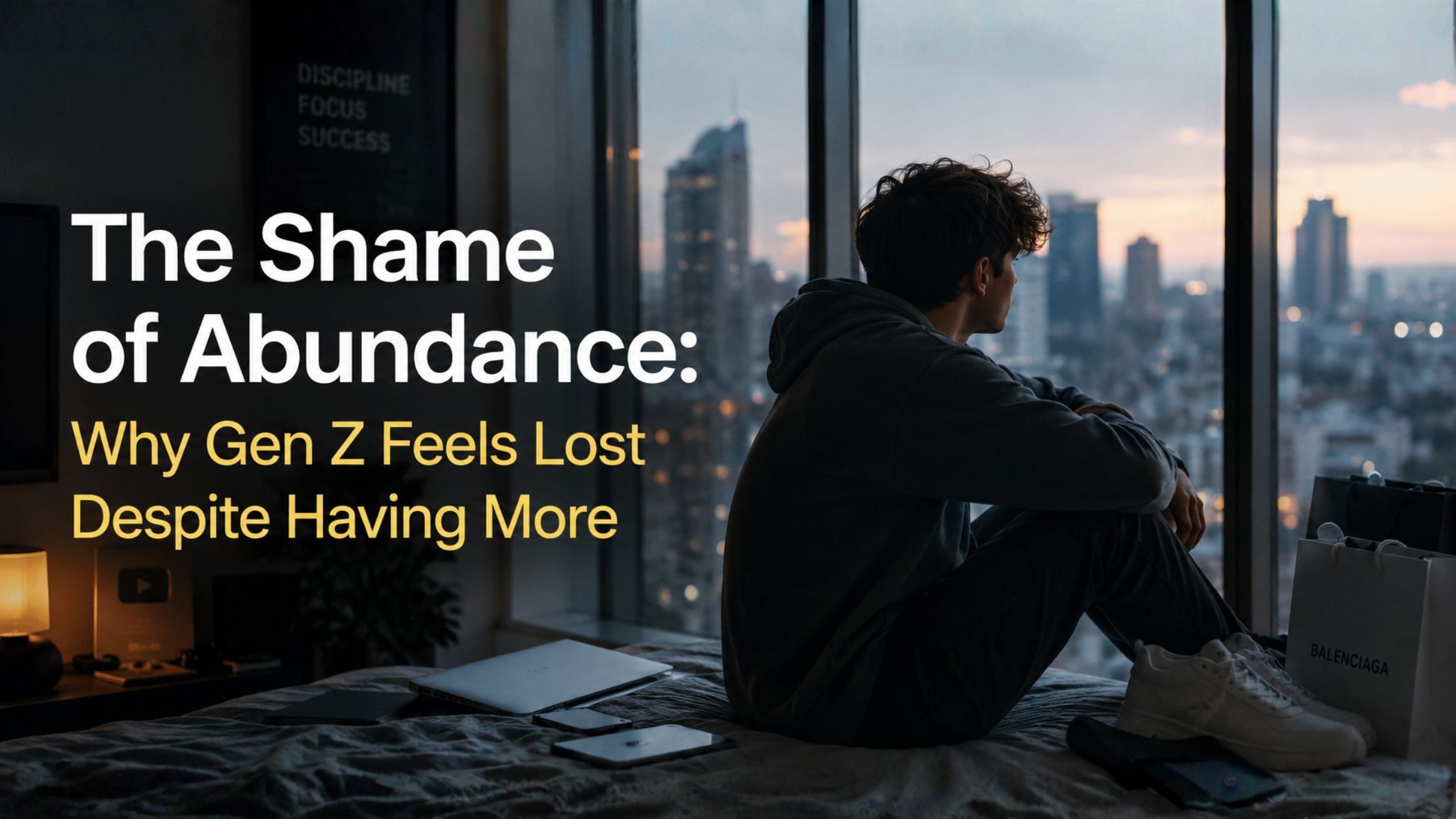
On paper, many Gen Z lives look full of opportunity.
There is more access to information, education, technology, mental health awareness, career options, and freedom of expression than previous generations had at the same age. Many young adults today are more informed, more connected, and more exposed to possibilities than ever before.
And yet, beneath all of this, there is a quiet feeling many struggle to explain:
“Why do I still feel unhappy?”
This question often carries guilt with it. Because when life appears comfortable from the outside, emotional emptiness can feel difficult to justify.
What “Abundance” Looks Like Today
Abundance today is not just about money.
It’s access. Access to endless content, choices, opportunities, lifestyles, opinions, experiences, and identities. Gen Z has grown up in a world where almost everything feels available or at least visible.
But when everything feels possible, it can also become overwhelming.
Too many choices don’t always create clarity. Sometimes, they create pressure.
Why More Doesn’t Automatically Feel Better

Human beings don’t only need opportunity. They also need meaning, direction, rest, and emotional grounding.
When life becomes heavily focused on achievement, comparison, and constant improvement, abundance can quietly turn into emotional exhaustion. Instead of enjoying what exists, the mind keeps asking:
- Am I doing enough?
- Am I behind?
- Could I be doing more?
This creates a strange emotional contradiction: having more, while constantly feeling lacking.
The Role of Social Media and Comparison
Social media magnifies abundance in ways the human mind was never designed to process constantly.
Every scroll exposes people to someone else’s success, beauty, productivity, relationships, travel, or lifestyle. Even when someone feels grateful for their own life, comparison quietly shifts attention toward what is missing.
Over time, satisfaction becomes harder to hold onto because there is always something more visible.
The problem is not just comparison. It's an endless comparison.
Why Guilt Often Comes With Emotional Struggle
Many Gen Z individuals feel guilty for struggling emotionally.
They think:
- Other people have it worse.
- I should be grateful.
- Why am I unhappy when I have so much?
This guilt can make emotional pain harder to talk about. Instead of seeking support, many minimise their feelings because they believe their struggles are not “serious enough.”
But emotional emptiness does not disappear simply because life looks comfortable externally.
The Pressure to Optimise Everything
Modern culture constantly pushes self-improvement.
There is pressure to:
- heal
- grow
- succeed
- stay productive
- build a personal brand
- maintain mental health
- stay socially aware
Even rest becomes something to optimise.
This creates a feeling that life is never fully enough as it is. There is always another goal, another version of the self to reach.
Why Identity Feels More Fragile Today
When identity becomes tied to achievement, visibility, or external validation, emotional stability becomes harder to maintain.
Many Gen Z individuals are still figuring out who they are while simultaneously feeling pressure to already “have it together.” This creates internal confusion:
- Am I genuinely happy?
- Or am I just performing well?
Abundance can make identity exploration more complicated because there are too many versions of success to compare oneself against.
The Emotional Cost of Constant Access
Constant access leaves very little emotional quiet.
The mind rarely gets a pause from stimulation, opinions, or expectations. Without enough stillness, people lose touch with what they genuinely feel or want.
Sometimes emotional emptiness is not about lacking things. It’s about lacking connection to oneself.
What Actually Helps
The answer is rarely “more.”
More productivity, more scrolling, more achievement, or more comparison often deepens the emptiness. What helps is slowing down enough to reconnect with what feels meaningful personally—not socially.
This may involve:
- reducing comparison
- building deeper offline relationships
- allowing rest without guilt
- focusing on values instead of image
Fulfilment often grows in quieter spaces.
The Bigger Picture
Gen Z is not weak for feeling emotionally lost despite abundance.
They are navigating a world filled with endless access, constant visibility, and pressure to maximise every part of life. Emotional overwhelm in such an environment is understandable.
The challenge is not learning how to get more. It’s learning how to feel grounded within what already exists.
Conclusion
Abundance does not automatically protect people from emptiness.
Gen Z has access to more than any previous generation, but access alone cannot replace emotional connection, meaning, or inner stability. Feeling lost in a world full of options does not make someone ungrateful—it makes them human.
If you’ve been feeling emotionally exhausted despite “having everything,” SoulNirvana offers a supportive space through its Psychological Counselling services.
If it feels right, you can book a session now and begin exploring what truly brings grounding, meaning, and emotional clarity.
FAQs
Q1. Why does Gen Z feel emotionally overwhelmed despite having more opportunities?
Because access and opportunity do not automatically create emotional fulfilment or stability.
Q2. Is social media increasing emotional dissatisfaction?
For many people, constant comparison and overstimulation can contribute to dissatisfaction and self-doubt.
Q3. Why do people feel guilty for struggling emotionally?
They may believe their problems are not “serious enough” compared to others.
Q4. Can emotional emptiness improve?
Yes. Slowing down, reconnecting with personal meaning, and seeking support can help.
References
Twenge, J. M. iGen: Why Today’s Super-Connected Kids Are Growing Up Less Rebellious.
American Psychological Association. Stress and young adults.
Pew Research Center. Social media and emotional well-being among Gen Z.
World Health Organization. Youth mental health and well-being.