
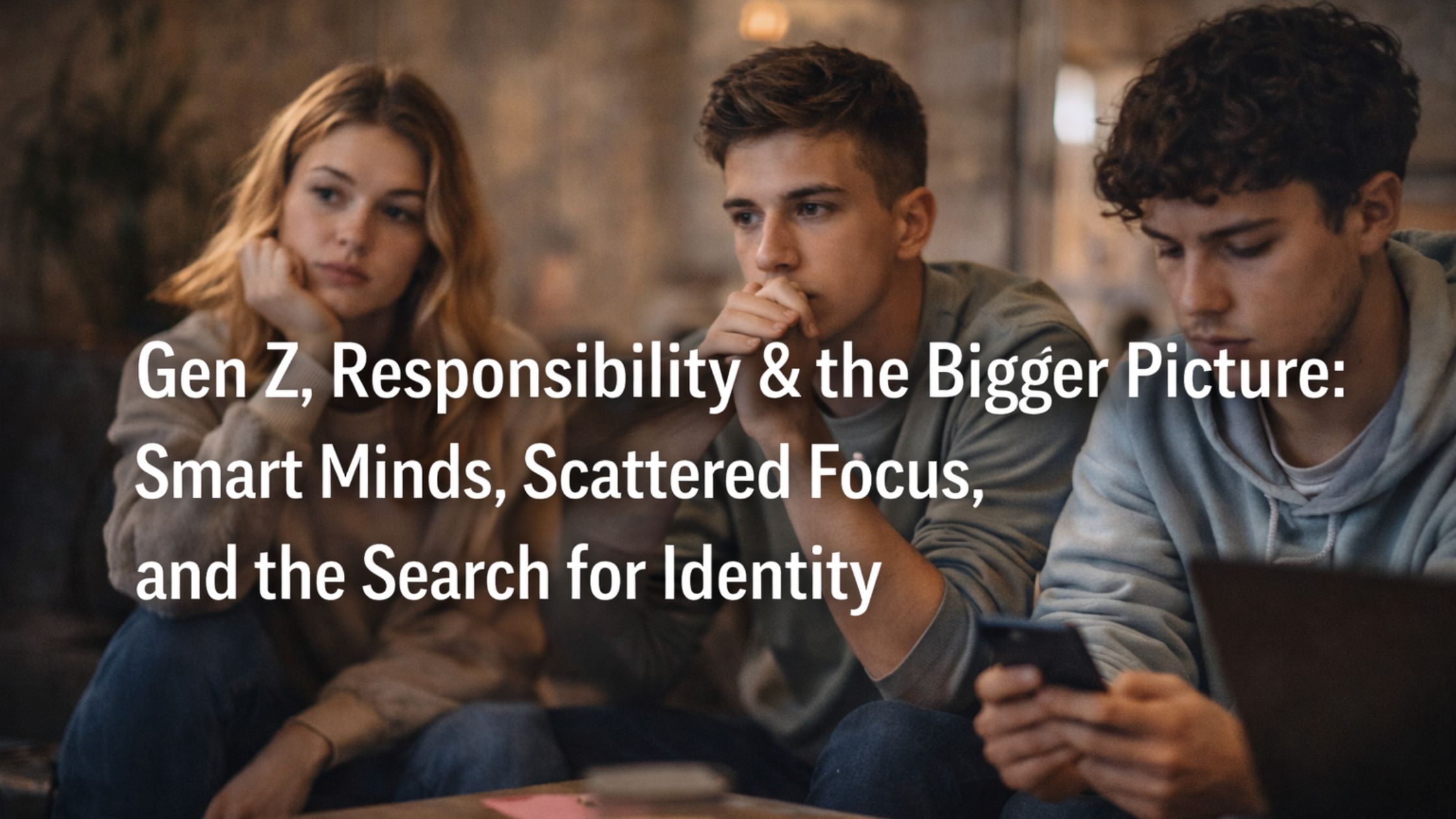
Gen Z is often described as aware, informed, and intellectually sharp.
They understand mental health, social issues, identity, and the world in ways earlier generations didn’t at the same age. They question things, challenge norms, and think deeply.
And yet, at the same time, there’s another pattern that quietly exists alongside this awareness difficulty with consistency, scattered focus, and a sense of being stuck between potential and action.
This blog explores that contrast: why Gen Z appears highly aware but sometimes struggles with responsibility and accountability in the bigger picture.
A Generation That Thinks Deeply
Gen Z has grown up with access to information like never before.
They are exposed to global conversations early about identity, mental health, relationships, social justice, and personal growth. This has created a generation that reflects, questions, and analyses more than many before them.
They are not unaware. In fact, they are often more aware than they feel equipped to handle.
But Awareness Doesn’t Always Translate Into Action
Knowing something and acting on it are not the same.
Many young people today understand what’s “right,” what’s “healthy,” and what they should be doing. But translating that into consistent behaviour can feel difficult.
There can be delays, distractions, or cycles of starting and stopping. Not because of lack of intelligence but because of overload.
Too much awareness without structure can lead to inaction.
The Pressure to Do Everything, Quickly

There is also a quiet urgency in how Gen Z experiences life.
Everything feels fast content, success stories, trends, expectations. There is pressure to achieve, grow, heal, and figure life out early. This creates a sense that time is always running.
As a result, many try to do more in less time learning multiple skills, exploring identities, chasing opportunities.
But when everything is urgent, focus becomes fragmented.
Why Focus Feels So Difficult
Constant digital engagement plays a role here.
Short-form content, notifications, and rapid information shifts train the mind to move quickly rather than stay deeply engaged. Over time, this makes sustained focus harder.
It’s not a lack of discipline. It’s a system that rewards speed over depth.
This can create a cycle of starting many things but completing fewer.
The Question of Responsibility and Accountability
Responsibility requires consistency.
It involves showing up even when motivation is low, following through, and taking ownership of actions. For many in Gen Z, this can feel heavy not because they don’t care, but because they are already carrying mental and emotional overload.
Accountability also requires clarity of direction. When identity itself feels uncertain, responsibility can feel unclear.
The Identity Layer Behind It All
One of the biggest underlying themes is identity.
Gen Z is exploring identity in more open and flexible ways than previous generations. While this is a strength, it can also create confusion. When you are still figuring out who you are, it becomes harder to decide what to commit to.
This can lead to:
- trying many paths without settling into one
- questioning decisions repeatedly
- feeling unsure about long-term direction
It’s not indecisiveness—it’s ongoing exploration.
Why This Is Not Laziness
From the outside, this pattern can be misunderstood.
It may look like distraction, inconsistency, or lack of seriousness. But often, it’s a mix of high awareness, pressure, overstimulation, and identity exploration happening at the same time.
The issue is not capability. It’s alignment.
What Helps Bring Balance
Balance doesn’t come from pushing harder. It comes from slowing down enough to focus.
This means choosing fewer things and committing to them, allowing time for depth instead of constant movement, and accepting that not everything needs to happen immediately.
Responsibility becomes easier when direction feels clearer and pace feels manageable.
When Support Can Help
If confusion, lack of direction, or inconsistency starts feeling overwhelming, it can help to talk it through.
Sometimes, having a space to sort thoughts without pressure or comparison allows clarity to emerge naturally. Support can help turn awareness into action.
Conclusion
Gen Z is not lacking awareness; they are navigating too much of it at once.
They are thinking deeply, feeling deeply, and trying to find their place in a fast-moving world. The challenge is not intelligence, it’s grounding that intelligence into consistent action.
With the right balance of awareness, structure, and patience, this generation has the potential to not just understand the world but meaningfully shape it.
If you’re feeling stuck between knowing and doing, or struggling with direction and consistency, SoulNirvana offers a supportive space through its Psychological Counselling services. If it feels right, you can book a session now and begin turning clarity into action at your own pace.
FAQs
Q1. Is Gen Z less responsible than previous generations?
Not necessarily. They are navigating different challenges, including information overload and identity exploration.
Q2. Why does Gen Z struggle with focus?
Constant digital stimulation and fast-paced content make sustained attention more difficult.
Q3. Is this about laziness?
No. It’s often about overwhelm, pressure, and lack of clarity.
Q4. Can this improve over time?
Yes. With structure, focus, and support, awareness can turn into consistent action.
References
Pew Research Center. Gen Z attitudes and behaviours.
American Psychological Association. Stress and youth in modern times.
Twenge, J. M. iGen: Why Today’s Super-Connected Kids Are Growing Up Less Rebellious.
World Health Organization. Adolescent mental health and development.