
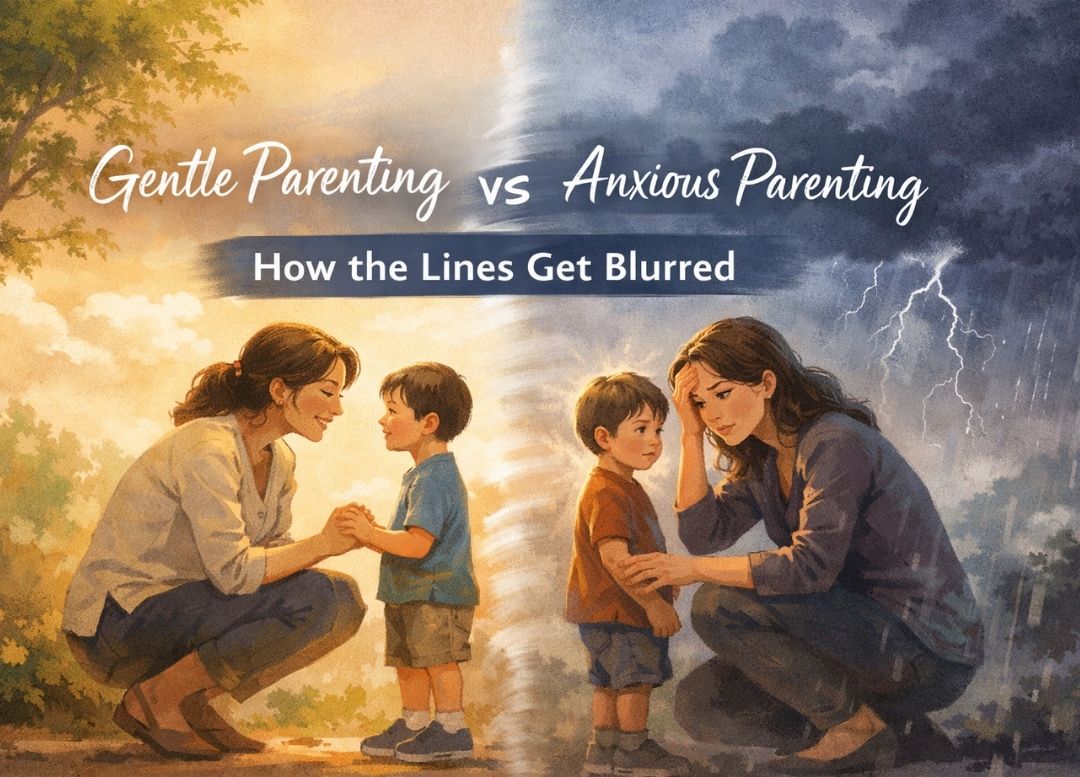
Many parents today want to do better than what they experienced growing up. They want to be kind, respectful, and emotionally present. They don’t want fear or force to shape their child’s world. Somewhere along this intention, the idea of gentle parenting enters the picture.
But sometimes, without realising it, gentleness starts carrying anxiety with it. What looks calm on the outside can quietly feel tense on the inside. This is where the line between gentle parenting and anxious parenting begins to blur.
This blog explores how that blurring happens, why it’s so common, and how parents can gently come back to steadiness.
What Gentle Parenting Is Meant to Be
At its core, gentle parenting is about connection.
It focuses on understanding a child’s emotions, setting boundaries without harshness, and guiding behaviour with empathy rather than fear. The parent remains emotionally regulated and offers safety, even when the child is dysregulated.
Gentle parenting does not mean the absence of limits. It means limits are held with calm confidence.
Where Anxiety Quietly Enters
Anxious parenting often comes from fear, not intention.
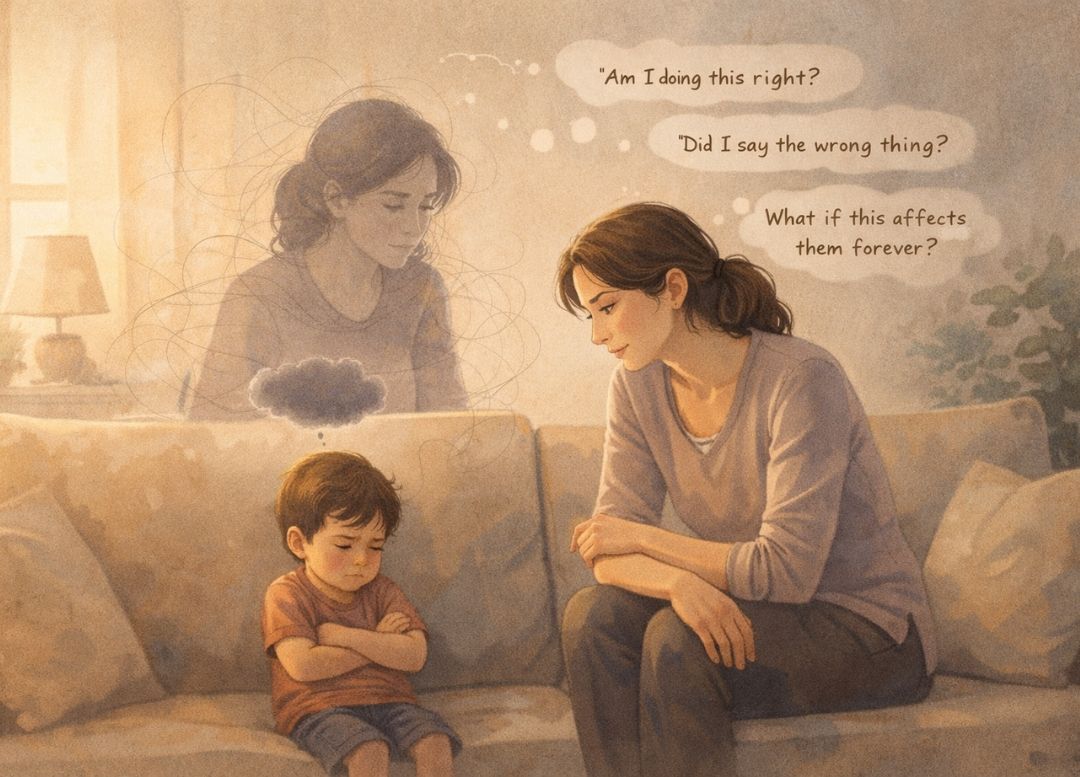
It can look like constantly worrying about doing the “right” thing, overthinking every reaction, or feeling responsible for a child’s every emotion. Parents may feel pressure to never upset their child, never make mistakes, or never be the cause of discomfort.
When anxiety enters, parenting stops feeling grounded and starts feeling fragile.
How the Lines Get Blurred
The confusion happens because anxious parenting can look gentle.
A parent may avoid setting boundaries to prevent distress. They may over-explain every decision out of fear of being misunderstood. They may apologise excessively or second-guess themselves constantly.
The child’s feelings become the centre of every decision, not as part of connection, but as something the parent feels responsible for fixing.
What This Feels Like for the Child
Children are sensitive to emotional undercurrents.
When a parent is anxious, even if they are kind and patient, the child can sense uncertainty. Instead of feeling guided, the child may feel responsible—responsible for the parent’s emotions, comfort, or reassurance.
This can lead children to feel unsure about boundaries or overly focused on managing how others feel.
Why This Is So Common Today
Many parents are raising children in a world filled with information, comparison, and judgement.
Social media, parenting advice, and constant opinions can create the sense that one wrong move can cause lasting harm. For parents who care deeply, this can turn care into vigilance and empathy into self-doubt.
Anxious parenting is often the cost of trying very hard to get things right.
The Difference Between Responsiveness and Over-Responsibility
Gentle parenting responds to emotions.
Anxious parenting feels responsible for emotions.
In gentle parenting, a parent can say, “I see you’re upset, and I’m here,” while still holding a boundary. In anxious parenting, the boundary may dissolve because the parent feels discomfort seeing distress.
The key difference is not kindness—it’s confidence.
What Helps Bring Balance Back
Parents don’t need to become stricter. They need to become steadier.
This often means allowing children to feel discomfort without rushing to fix it, trusting that frustration is part of growth, and reminding oneself that being a good parent does not mean being a perfect emotional shield.
When parents feel grounded, children feel safe—even when things are hard.
When to Pause and Reflect
It may help to pause when parenting starts feeling exhausting, when decision-making feels paralysing, or when guilt becomes constant. These moments are not signs of failure. They are invitations to reflect on whether anxiety has quietly taken over gentleness.
Support can help parents reconnect with their own emotional regulation, which is the foundation of truly gentle parenting.
Conclusion
Gentle parenting is not about never upsetting your child. It’s about being a calm, reliable presence through their full range of emotions.
When anxiety blurs the lines, parenting can start to feel heavy and uncertain. With awareness, support, and self-compassion, it’s possible to return to a place where gentleness feels grounded rather than fragile.
If you find yourself caught between wanting to be gentle and feeling constantly anxious, SoulNirvana offers a supportive space through its Comprehensive Parenting Support Program. You don’t have to navigate this alone.
Book a session now and take a step toward calmer, more confident parenting.
FAQs
Q1. Can gentle parenting still include firm boundaries?
Yes. Boundaries are essential in gentle parenting and help children feel safe.
Q2. How can I tell if anxiety is driving my parenting?
If you feel constant guilt, fear of upsetting your child, or difficulty holding limits, anxiety may be influencing your responses.
Q3. Does anxious parenting harm children?
It doesn’t come from bad intent, but it can affect how secure and confident children feel over time.
Q4. Can parents shift from anxious to grounded parenting?
Yes. With reflection and support, parents can build confidence and emotional steadiness.
References
Siegel, D. J., & Bryson, T. P. The Whole-Brain Child.
https://drdansiegel.com/books/the-whole-brain-child/
UNICEF. Positive parenting and emotional development.
https://www.unicef.org/parenting
Center on the Developing Child, Harvard University. Serve and return interaction shapes brain architecture.
https://developingchild.harvard.edu/science/key-concepts/serve-and-return/