
There is a strange contradiction in the way many of us live today.
We have never had more ways to stay connected, yet conversations often feel shorter. We have unlimited access to information, yet many people struggle to understand what they are actually feeling. We can reach anyone within seconds, but many still carry a quiet sense of loneliness that doesn't always make sense.
Technology is not the enemy here. It has made life easier in countless ways. It allows us to work remotely, stay close to loved ones across the world, learn new skills, seek professional help, and build meaningful communities. The problem begins when our digital lives slowly become the place where most of our emotional experiences are happening, without us even noticing it.
Most conversations about digital well-being revolve around reducing screen time. While that can certainly help, it also oversimplifies a much bigger issue. The real concern is not how many hours we spend online. It is how our relationship with technology quietly changes the way we experience emotions, relationships, self-worth, and even silence.
Many people assume they are simply using technology as a tool. In reality, technology also influences how we think, what we pay attention to, how we react, and what we believe about ourselves. These changes are rarely dramatic. They happen gradually, almost invisibly, until one day we realise we feel emotionally exhausted without fully understanding why.
This isn't a blog about deleting social media or throwing your phone away. It's an invitation to pause and ask a different question:
What if your digital habits are shaping your emotional life in ways you've never stopped to notice?
We Don't Just Scroll Through Content. We Live Through It.
Imagine waking up and checking your phone before you've even spoken to another person.
Within ten minutes, you may have seen someone's wedding photos, breaking news from another country, a motivational quote, a video about childhood trauma, a friend's vacation, financial advice, parenting tips, and an advertisement telling you how to become a better version of yourself.
Individually, none of these things seem particularly harmful. Together, however, they create an emotional environment that no previous generation has experienced.
Our minds are remarkably adaptable, but they are also deeply impressionable. Every piece of content we consume leaves behind a small emotional footprint. Some make us feel hopeful, others trigger comparison, some create anxiety, while others quietly plant expectations about how our lives should look.
The challenge is that we rarely notice these emotional shifts as they happen. Instead, they accumulate throughout the day. By evening, we may simply feel mentally drained without being able to explain why.
This is one of the biggest misconceptions about digital life. We believe we are only consuming information, when in reality we are also absorbing emotional experiences that were never ours to begin with.
Emotional Exhaustion Doesn't Always Come From Your Life. Sometimes It Comes From Everyone Else's.
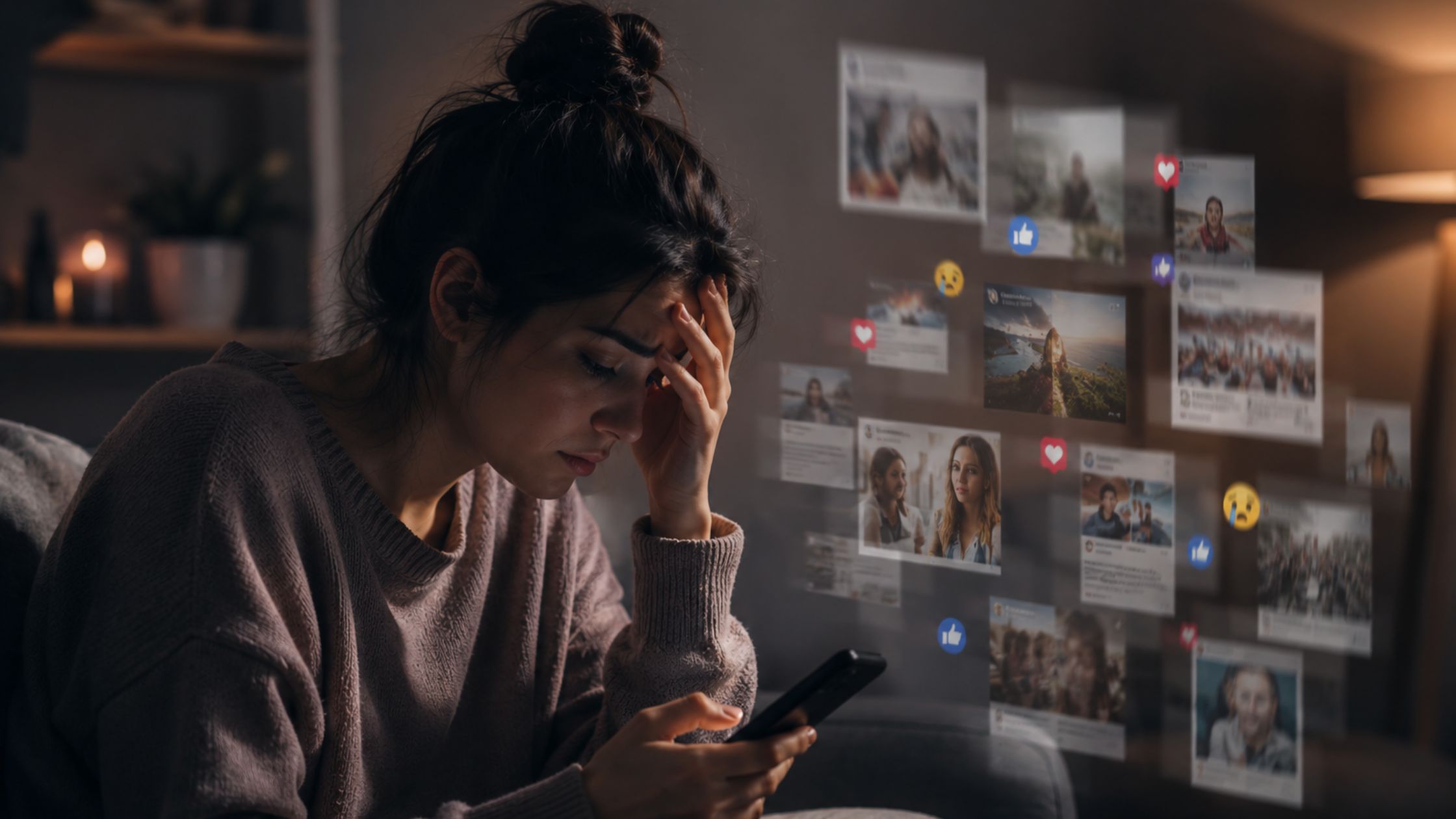
When people say they feel overwhelmed, they often assume it is because they have too much happening in their own lives.
Sometimes that's true. But there is another possibility that receives far less attention.
Today, we are exposed to hundreds of other people's experiences every single day. We celebrate strangers' achievements, witness global tragedies, follow debates we were never part of, absorb opinions we never asked for, and compare ourselves with carefully curated versions of other people's lives.
The human brain evolved to process the emotional experiences of relatively small communities. It was never designed to emotionally engage with hundreds or even thousands of lives in a single day.
Without realising it, we carry fragments of other people's stress, success, fear, anger, joy, and disappointment.
This doesn't mean empathy is a problem. It simply means that our emotional system has limits. When those limits are constantly stretched, emotional fatigue becomes almost inevitable.
Many people think they are tired because they have been busy. Sometimes they are tired because their minds have spent the entire day emotionally reacting to people they have never even met.
The Constant Need to Respond Is Quietly Changing Our Relationship With Ourselves
One of the least discussed effects of our digital lives is that they leave very little room for uninterrupted self-awareness.
There was a time when waiting was simply waiting. Sitting in traffic meant looking outside the window. Standing in a queue meant observing the people around us or simply letting our thoughts wander.
Those small pauses were not empty. They gave our minds opportunities to process conversations, reflect on experiences, and organise emotions naturally.
Today, those pauses rarely exist. A few seconds of silence are quickly filled with checking messages, opening social media, replying to emails, or watching another short video. Over time, this creates an interesting psychological shift.
We become incredibly skilled at responding to external stimulation, but less familiar with responding to ourselves.
When difficult emotions appear, many people instinctively reach for distraction before they even recognise what they are feeling. It is not a conscious decision. It has simply become a habit.
This is one reason why some people struggle to answer simple questions like, "How have you been feeling lately?"
Not because they don't have emotions. Because they haven't had enough uninterrupted moments to notice them.
We Have Started Measuring Ourselves Through Digital Feedback
Every generation has experienced comparison in some form. The difference today is that comparison has become constant.
Whether we realise it or not, digital platforms encourage us to measure our lives through numbers. Likes, comments, followers, views, shares, replies, streaks, and notifications quietly become indicators of attention and validation.
Most people know intellectually that these numbers do not define their worth. Emotionally, however, things are often more complicated.
Imagine sharing something meaningful and receiving very little response. Or seeing someone else's achievements celebrated while your own efforts seem invisible. Even when we tell ourselves not to care, a small part of us often wonders whether we are being seen, appreciated, or valued.
This isn't vanity. It reflects a basic human need for connection and recognition.
The problem arises when digital responses begin carrying more emotional weight than our real-life relationships or our own internal sense of self-worth.
Gradually, confidence becomes something we look for outside ourselves instead of building from within.
If you've noticed that stress, anxiety, emotional overwhelm, or self-doubt are becoming regular parts of your life, speaking with a professional can help you understand the patterns beneath those feelings instead of simply managing the symptoms. Personalized Therapy can provide a safe and supportive space to explore these patterns at your own pace.
Not Every Emotion Needs To Be Escaped
One of the most significant emotional changes created by the digital world has nothing to do with comparison or screen time. It has to do with discomfort.
Modern technology has become incredibly effective at helping us avoid unpleasant feelings. The moment boredom appears, there is endless content waiting to entertain us. If loneliness surfaces, we can immediately message someone or immerse ourselves in social media. When anxiety creeps in, distraction is available within seconds.
While there is nothing inherently wrong with seeking comfort, constantly escaping uncomfortable emotions can unintentionally weaken our ability to understand them.
Emotions are not interruptions to life. They are part of how we make sense of it.
Sadness often tells us something that matters deeply. Frustration may reveal that an important need has gone unmet. Loneliness can remind us that we long for genuine connection rather than constant communication.
When every uncomfortable emotion is immediately replaced with digital stimulation, we may experience temporary relief, but we also miss the opportunity to learn what those emotions were trying to tell us.
Over time, emotions that are repeatedly avoided rarely disappear. Instead, they tend to return in different forms—sometimes as persistent stress, unexplained irritability, emotional numbness, or a lingering sense that something feels "off" even when life appears to be going well.
When Constant Communication Starts Replacing Real Connection
One of the biggest misconceptions of the digital age is that being connected is the same as feeling connected.
Most of us speak to more people in a single day than previous generations could have imagined. We respond to messages while travelling, react to stories between meetings, wish people on birthdays with a tap, and stay updated about friends we haven't met in years. From the outside, it appears that relationships have become easier to maintain.
Yet many people quietly admit that they feel emotionally alone. This happens because communication and connection are not interchangeable.
A conversation is more than exchanging words. It is about feeling heard without being rushed. It is about noticing someone's expressions, sensing pauses, understanding what is left unsaid, and feeling safe enough to share something vulnerable without worrying about how it will be received.
Digital conversations often prioritise speed over presence. We reply while doing something else, skim through messages instead of fully reading them, and move from one conversation to another within seconds. While this keeps us socially active, it does not always satisfy our emotional need to feel genuinely understood.
That is why someone can have hundreds of contacts on their phone and still struggle to think of one person they can call when life feels overwhelming.
The number of conversations we have has increased. The depth of many of those conversations, however, has quietly reduced.
We Have Become Better at Staying Busy Than Staying Present
Think about the last time you sat with absolutely nothing to do.
No phone. No music. No television in the background. No notifications asking for your attention.
For many people, even imagining that feels uncomfortable. It isn't because silence has become harmful. It is because we have become unfamiliar with it.
Presence requires us to notice ourselves. It asks us to become aware of what is happening internally rather than constantly reacting to what is happening around us. That can feel uncomfortable, especially if we have been moving from one task, one screen, or one notification to another for years.
But presence is where emotional clarity often begins.
It is during quiet moments that we recognise we have been carrying stress for weeks. It is during an uninterrupted walk that we realise why a conversation from yesterday is still bothering us. It is while sitting without distractions that we sometimes discover emotions we had been avoiding without even knowing it.
Many of us are searching for peace while unintentionally filling every available space where peace has the chance to appear.
A Healthy Digital Life Isn't About Using Your Phone Less. It's About Using It More Intentionally.
The answer is not to reject technology or feel guilty every time you pick up your phone.
Technology is part of modern life, and in many ways, it enriches our lives. It helps us learn, stay informed, maintain relationships across distances, and even access mental health support that might otherwise be unavailable.
The goal is not to create fear around technology. The goal is to become more aware of the role it plays in our emotional lives.
That awareness can begin with a few honest questions.
Do you reach for your phone because you genuinely need it, or because silence feels unfamiliar?
Do you leave social media feeling inspired, or do you often walk away feeling like you are somehow falling behind?
When you feel emotionally overwhelmed, do you give yourself time to understand what you are experiencing, or do you immediately distract yourself with more content?
These questions are not about judging yourself. They are about noticing patterns that have become so automatic that they often go unquestioned.
Sometimes, even small changes can create meaningful emotional shifts. Keeping your phone away during meals, allowing yourself a few quiet minutes before sleeping, or spending time with someone without checking notifications every few minutes may seem insignificant. Yet these moments gradually rebuild something many people are unknowingly missing—the ability to be fully present with themselves and with others.
If you have been feeling emotionally drained, constantly distracted, or disconnected from yourself despite doing everything "right," it may be worth exploring what lies beneath those experiences. Personalized Therapy can provide a safe, supportive space to understand your emotional patterns, strengthen your relationship with yourself, and develop healthier ways of responding to life's challenges rather than simply reacting to them.
Your Emotional Life Deserves the Same Attention You Give Your Digital Life
We regularly update our phones, organise our calendars, respond to emails, and keep our devices charged because we understand that they need maintenance to function well.
Our emotional lives deserve the same care.
Ignoring emotional exhaustion doesn't make it disappear. Constantly distracting ourselves doesn't always make difficult feelings go away. More often than not, it simply delays the moment when we finally have to acknowledge what has been asking for our attention all along.
Perhaps the most important shift we can make is not spending less time online, but becoming more conscious of how our digital habits influence the way we think, feel, relate to others, and relate to ourselves.
Technology will continue to evolve, and our lives will continue to become more digital. The question is not whether we should embrace technology. The question is whether we can embrace it without losing our ability to stay emotionally connected—to ourselves, to the people we love, and to the life unfolding beyond our screens.
If this blog encourages you to pause and reflect on your own emotional well-being, don't ignore what you've noticed. Sometimes, understanding ourselves begins with a single honest conversation. At Soul Nirvana, we believe emotional well-being isn't about becoming a different person, it's about reconnecting with the person you've always been beneath the noise.
Book a Session and take the first step towards understanding your emotional world with compassionate, professional support.
Frequently Asked Questions (FAQs)
1. Can spending too much time on my phone affect my emotional well-being?
Yes. While technology itself is not harmful, constantly consuming digital content, switching attention rapidly, and relying on devices to avoid uncomfortable emotions can contribute to stress, emotional fatigue, and feelings of disconnection.
2. How can I tell if my digital habits are affecting my mental health?
If you frequently feel anxious, emotionally drained, restless, distracted, or compare yourself with others after using digital platforms, it may be worth reflecting on how those habits are influencing your emotional well-being.
3. Is taking a digital detox the only solution?
Not necessarily. For most people, developing healthier and more intentional digital habits is more practical and sustainable than completely disconnecting from technology.
4. Can therapy help with emotional overwhelm caused by digital stress?
Yes. Therapy can help you understand how your thoughts, emotions, relationships, and daily habits interact, enabling you to build healthier coping strategies and a more balanced relationship with technology.
5. Why do I still feel lonely even though I'm always connected online?
Online communication can keep us socially connected, but emotional connection often requires presence, vulnerability, and meaningful conversations that go beyond frequent messaging or social media interactions.
6. When should I consider seeking professional support?
If emotional stress, anxiety, loneliness, or overwhelm begin affecting your relationships, work, or quality of life, seeking support from a qualified mental health professional can be a valuable step.
References
American Psychological Association. Healthy Technology Use: What Research Says.
World Health Organization. Mental Health.
https://www.who.int/health-topics/mental-health
Center for Humane Technology.
Jonathan Haidt. The Anxious Generation.
https://www.anxiousgeneration.com
Harvard Medical School. Mindfulness and Emotional Well-being.