
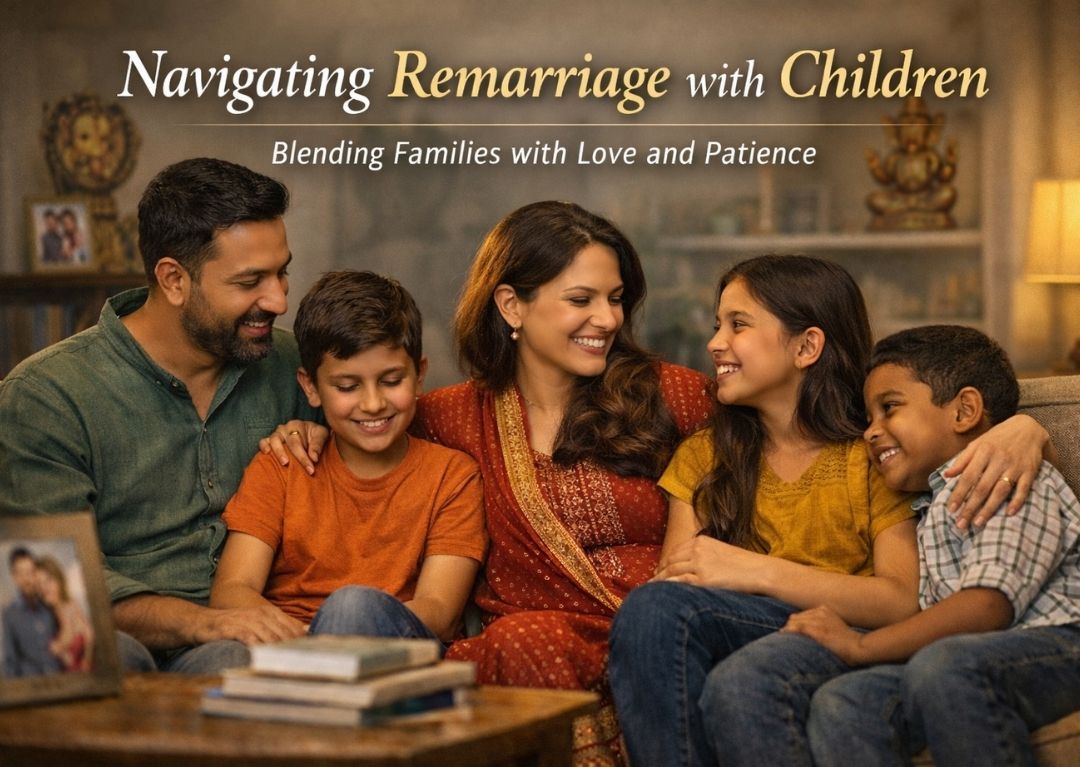
Remarriage often begins with hope. Two adults choose each other again, believing in a second chance at partnership. But when children are part of that picture, love expands beyond two people. It becomes layered, emotional, and sometimes complicated!
Remarriage with children is not just about building a new couple dynamic. It’s about blending histories, expectations, loyalties, and routines. This blog explores the emotional realities of remarriage with children, why challenges are common, and how families can move toward steadiness with care.
Why Remarriage Feels Different the Second Time
In a first marriage, partners often begin together without previous family systems attached. In remarriage, there are past relationships, co-parenting arrangements, and emotional histories that don’t simply disappear.
Children may carry grief, confusion, or divided loyalty. Adults may carry fear of repeating past mistakes. Even when everyone has good intentions, the emotional terrain is complex.
Remarriage is not just a new chapter. It is a merging of chapters already written.
The Emotional World of Children in Remarriage
Children in blended families are navigating more than adults often realise.
They may feel protective of their biological parent. They may worry that accepting a step-parent means betraying the other parent. Some may resist new rules or withdraw emotionally, unsure of where they fit.
These reactions are not signs of disrespect. They are signs of adjustment.
Children need time to feel safe in a new family structure. Emotional bonds cannot be rushed.
The Role of the Stepparent
Stepparents often enter with a desire to connect and contribute. At the same time, they may feel uncertain about authority, boundaries, and affection.
Trying too hard to bond can feel overwhelming to a child. Holding back completely can feel distant. The balance lies in patience—allowing connection to grow naturally rather than forcing it.
Trust in blended families is built slowly, through consistent presence rather than grand gestures.
Common Tensions in Remarriage
Certain challenges tend to surface repeatedly in blended families:
- Differences in parenting styles
- Conflicts over discipline
- Loyalty conflicts for children
- Communication breakdown between partners
- Boundaries with former spouses
These tensions are not signs that remarriage is failing. They are predictable stress points when family systems merge.
Why the Couple Relationship Still Matters
In the midst of managing children’s emotions, it’s easy for the couple's relationship to take a back seat.
However, research consistently shows that the strength of the adult partnership influences the overall stability of the blended family. When partners communicate openly, support each other, and present a united front, children feel more secure.
The couple relationship is not separate from the family dynamic, it anchors it.
How to Build Stability in a Blended Family
Stability grows when expectations are realistic.
Children may not immediately feel close to a step-parent. Conflicts may take time to smooth out. Adults may need to revisit boundaries and communication often.
Helpful approaches include:
- gradual role definition for stepparents
- consistent routines
- open, age-appropriate conversations
- private couple discussions about parenting differences
- patience with emotional adjustment
Progress in blended families is measured in trust, not speed.
When to Seek Support
Remarriage with children can benefit from support when conflicts feel ongoing, communication becomes strained, or children show persistent distress.
Couples counselling or family therapy can provide a neutral space to clarify roles, strengthen communication, and reduce tension.
Seeking help early often prevents patterns from hardening.
Conclusion
Remarriage with children is not simply about love between partners. It is about weaving together histories, emotions, and identities into something new.
Challenges are not proof of failure—they are part of blending lives. With patience, clear communication, and emotional understanding, blended families can create relationships that feel secure and respectful.
If you are navigating remarriage with children and need guidance, SoulNirvana offers support through its Couple Counseling and Assessment services and family-focused care plans.
If it feels right, you can book a session now and take a thoughtful step toward building stability in your blended family.
FAQs
Q1. How long does it take for children to adjust to remarriage?
Adjustment varies, but emotional bonding often takes months or even years. Patience is key.
Q2. Should stepparents discipline children immediately?
Clear boundaries are important, but authority is best built gradually and with the biological parent’s support.
Q3. Is conflict normal in blended families?
Yes. Blending family systems naturally brings tension as roles and expectations shift.
Q4. When should couples seek counselling?
When communication feels strained, parenting disagreements escalate, or children show ongoing emotional distress.
References
American Psychological Association. Blended families and child adjustment.
https://www.apa.org/topics/families/stepfamily
Ganong, L., & Coleman, M. Stepfamily relationships and adjustment.
National Stepfamily Resource Center. Understanding stepfamily dynamics.
Gottman, J. M. The Seven Principles for Making Marriage Work.