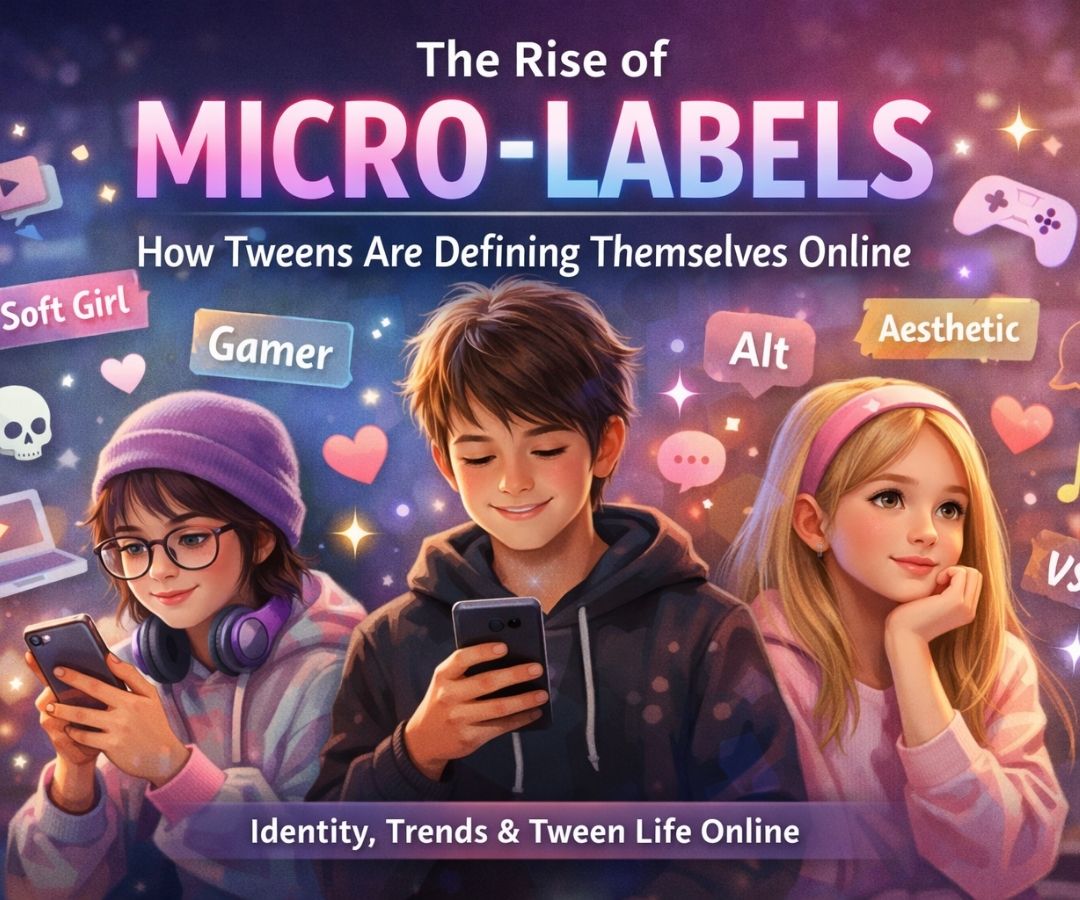
Open any social media platform today and you’ll see words being used in ways they weren’t before. Short labels, aesthetics, identities, and categories appear everywhere. For tweens, these micro-labels can feel like a quick way to answer a big question: Who am I?
At an age where identity is still forming, online trends offer ready-made language. Sometimes this feels comforting. Sometimes it quietly adds pressure. This blog explores why micro-labels have become so appealing to tweens, what role the online world plays, and how this trend shapes their emotional development.
What Are Micro-Labels?
Micro-labels are small, specific terms used to describe personality traits, emotional states, preferences, or identities. They often come from online communities and trends, spreading quickly through videos, comments, and peer conversations.
For tweens, these labels can feel helpful. They give words to feelings that are hard to explain. They offer a sense of belonging. They say, “There are others like me.”
But they can also feel limited when taken too seriously or too early.
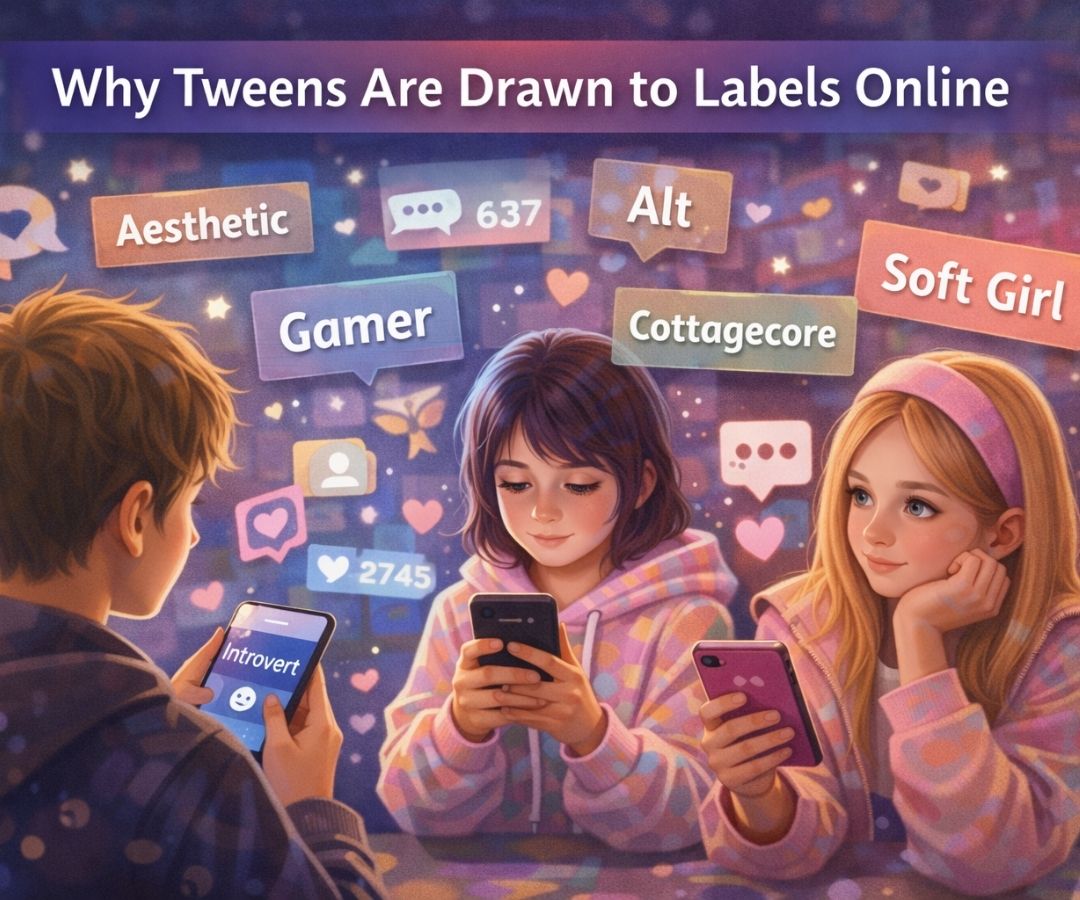
Why Tweens Are Drawn to Labels Online
The tween years are full of questions. Tweens start noticing differences between themselves and others. They wonder why they feel certain things more strongly, or why they don’t quite fit in the way they expected to.
Online spaces provide quick answers. A label can offer instant clarity without requiring long reflection. It can feel reassuring to say, “This explains me,” especially when emotions feel confusing.
At this stage, identity is still flexible. Labels can feel like anchors in uncertain water.
How Social Media Accelerates This Process
Online platforms reward categorisation. Content is organised by tags, trends, and identities. Tweens are constantly exposed to people naming and defining themselves publicly.
When tweens see peers confidently claim labels, it can feel like something they should be doing too. The pressure isn’t always direct, but it’s present. Naming oneself becomes part of fitting in.
The risk is that exploration can turn into early self-definition before there’s enough space to grow.
When Labels Help—and When They Don’t
Labels can be useful when they help tweens feel seen or understood. They can reduce loneliness and help make sense of emotions that feel overwhelming.
But problems arise when labels become rigid. When a tween feels they must behave a certain way to “match” the label, or fears changing because it would mean losing identity, the label stops serving growth.
Identity at this age is meant to be fluid, not fixed.
How This Shows Up in Everyday Life
Adults may notice tweens strongly identifying with specific terms they’ve encountered online. They may correct others who misunderstand the label, feel defensive about it, or become anxious when their behaviour doesn’t align perfectly with it.
Sometimes, tweens may cycle through multiple labels in a short time. This isn’t confusion, it’s exploration. But when the pressure to choose one becomes heavy, it can create stress rather than clarity.
Why Adults Often Feel Unsure How to Respond
Many adults feel caught between wanting to respect a child’s self-expression and worrying about premature self-definition.
Dismissing labels outright can feel invalidating. Over-validating them can unintentionally make them feel permanent. The challenge lies in holding space for exploration without locking identity too early.
Tweens don’t need answers set in stone. They need permission to change.
What Supports Healthy Identity Development
Healthy identity development leaves room for curiosity.
Tweens benefit when adults respond with openness rather than urgency. Simple curiosity “What does that word mean to you?”can invite reflection without pressure. Emphasising that people grow and change helps tweens feel less trapped by definitions.
When identity is treated as something evolving, labels become tools, not cages.
When to Pay Closer Attention
Extra support may be helpful when a tween:
- feels distressed when questioned about a label
- becomes rigid or fearful about changing
- limits experiences to “fit” an identity
- ties self-worth closely to online validation
These signs suggest that labels may be carrying more emotional weight than they need to.
Conclusion
Micro-labels offer tweens language at a time when they are searching for meaning. Used gently, they can support understanding. Used rigidly, they can create pressure.
Tweens don’t need to fully define themselves yet. They need room to explore, to shift, and to grow without fear of being “wrong.”
If you’re navigating these conversations with your child and feel unsure how to hold that balance, SoulNirvana offers a thoughtful, supportive space through its Comprehensive Parenting Support Program and counselling services. If it feels right, you can book a session now and explore how to support identity development with care rather than pressure.
FAQs
Q1. Is it normal for tweens to use many labels online?
Yes. It’s often part of exploration rather than a final identity.
Q2. Should parents discourage labels altogether?
Not necessarily. Curiosity and conversation are usually more helpful than dismissal.
Q3. Can labels limit a child’s growth?
They can, if treated as fixed rather than flexible.
Q4. When should parents seek professional support?
When identity concerns cause distress, rigidity, or interfere with daily life.
References
American Psychological Association. Identity development in children and adolescents.
https://www.apa.org/monitor/2014/02/
Steinberg, L. Age of Opportunity: Lessons from the New Science of Adolescence.
https://www.goodreads.com/book/show/18209834-age-of-opportunity
Pew Research Center. Teens, social media, and identity.