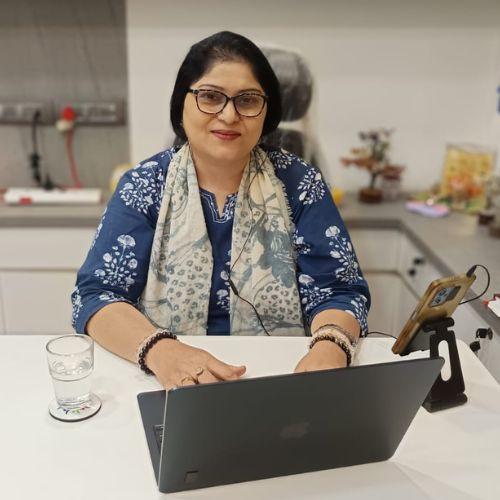

Women’s empowerment is often associated with education, employment, financial independence, and the freedom to build a life beyond the boundaries of the home. A woman who earns her own income, develops professional skills, and contributes to her family is often seen as someone who has gained independence. Yet, there is another side to this experience that receives far less attention: what happens when a woman is allowed to work, but does not feel free to speak about her work at home?
She may leave home every morning, interact with colleagues, make professional decisions, manage responsibilities, and handle challenges that require confidence and competence. But when she returns home, she may find herself carefully choosing what to share. She may avoid discussing a disagreement with a colleague, remain quiet about a difficult day, or hesitate to speak about a professional opportunity because she fears that the conversation could lead to conflict or restrictions on her employment.
Her freedom to work may exist, but her freedom to speak about that work may feel conditional.
This is where the conversation about women’s empowerment becomes more complicated. Being permitted to work is not necessarily the same as having the freedom to exercise professional independence. A woman may be contributing financially and participating in the working world while still feeling that her career depends on keeping certain thoughts, experiences, and concerns to herself.
When Permission Is Mistaken for Empowerment
For some women, being allowed to work outside the home is itself a significant opportunity. It may represent years of education, personal ambition, family negotiations, or the chance to build an identity beyond domestic responsibilities. The opportunity may be valued deeply, particularly when continuing to work is not something the woman feels she can take for granted.
But permission and autonomy are not the same thing.
Permission suggests that someone else has the authority to allow or withdraw an opportunity. Autonomy means having a meaningful role in decisions that affect one's own life. A woman may be permitted to accept a job while having limited freedom to decide how her professional responsibilities fit into family life, how she manages workplace relationships, or whether she can pursue further opportunities.
The distinction becomes especially important when her employment is treated as something that can be reconsidered whenever disagreements arise at home.
She may be told that working is acceptable as long as it does not interfere with family expectations, challenge established roles, or create discomfort for others. She may be encouraged to earn, but expected not to question. She may be praised for being capable, but discouraged from expressing opinions that are considered inconvenient.
In such circumstances, employment can become conditional rather than empowering. The woman has entered the workplace, but she may still have to negotiate for the right to participate in it on her own terms.
The Silence That Protects a Woman’s Opportunity

Silence is not always a sign that someone has nothing to say. Sometimes, it is a decision made after carefully considering the consequences of speaking.
A woman who fears that her employment could be taken away may begin to filter her conversations at home. She may decide that a workplace disagreement is not worth discussing, that sharing a difficult experience will lead to unnecessary arguments, or that expressing dissatisfaction with a professional situation might be interpreted as evidence that she should stop working.
Over time, this careful filtering can become a habit.
She may begin by withholding a single detail to avoid conflict. Later, she may stop sharing work-related frustrations altogether. Eventually, even positive experiences may become difficult to discuss if they could invite criticism, suspicion, or unwanted interference.
The silence may appear to preserve peace within the household, but it can also create an emotional distance. Work occupies a substantial part of her day, yet she cannot comfortably talk about that part of her life with the people closest to her.
She is present at home, but an important part of her experience remains unspoken.
This does not mean that every disagreement about work is an attempt to restrict a woman’s independence. Families can have genuine concerns about time, responsibilities, finances, or practical arrangements. The problem arises when discussion is replaced by fear, and the possibility of losing employment makes it difficult for a woman to express herself honestly.
The Emotional Cost of Living Between Two Worlds
A working woman may develop two different ways of presenting herself.
At work, she may be expected to communicate clearly, solve problems, share ideas, take responsibility, and make decisions. Her professional role may require her to speak confidently and stand by her judgment.
At home, she may feel compelled to become cautious, agreeable, or silent about the very experiences that shape her working life.
Moving between these two environments can create an internal conflict. She knows she is capable of making decisions, yet she may hesitate to express them in her personal relationships. She may be trusted with professional responsibilities but feel that her judgment is questioned when those responsibilities affect family expectations.
The difficulty is not simply that she has different responsibilities in different settings. Most people adjust their behaviour according to context. The deeper issue is when she feels that expressing an ordinary opinion could threaten something important to her identity and independence.
She may begin questioning whether it is worth sharing her thoughts at all. She may become increasingly careful about what she says, how she says it, and whether a conversation could have consequences beyond the immediate disagreement.
When this happens repeatedly, the emotional effort of remaining silent can become another responsibility she carries alongside her work and family life.
Financial Independence Does Not Automatically Mean Personal Freedom
Earning money can expand a woman's choices. It may provide access to resources, a stronger sense of capability, and greater participation in decisions about her future. But income alone does not guarantee that she can make decisions freely or speak openly within her family.
Research examining women’s economic empowerment in India has also highlighted this complexity: financial resources and employment can improve some dimensions of autonomy without automatically resolving restrictions in other areas of life.
The important distinction is between having a resource and having the freedom to use that resource meaningfully.
A woman may earn a salary but have limited control over how it is spent. She may contribute to household expenses but have little say in decisions affecting her career. She may be educated and professionally capable but still feel that continuing to work depends on maintaining approval at home.
In such situations, the visible signs of empowerment may conceal the limitations surrounding it.
This is why women’s empowerment cannot be measured only by whether a woman has a job, receives a salary, or leaves the house for work. It also involves whether she can make meaningful choices, participate in decisions, express concerns, and retain a sense of ownership over her professional life.
Financial independence can be an important part of empowerment, but it cannot replace the need for personal agency and mutual respect.
When Family Peace Depends on Her Silence
In some households, a woman's willingness to remain quiet may gradually become part of what keeps everyday life running smoothly. She may learn which subjects are safe to discuss and which are likely to create tension. She may avoid sharing a difficult interaction at work because she expects to be questioned about why it happened, why she responded in a particular way, or whether her job is worth the trouble.
Instead of being able to discuss the experience itself, she may find herself defending her decision to work.
This can shift the focus away from the actual issue. A disagreement with a colleague becomes a discussion about whether she should be employed. A demanding week becomes an argument about whether working outside the home is necessary. A professional ambition becomes a question of whether she is prioritising her career over her family.
When every work-related concern carries the possibility of reopening the question of employment, ordinary conversations become emotionally risky.
The woman may choose silence because it feels safer than explaining herself again. Yet a peace maintained through one person's constant self-censorship is different from a relationship in which both people can speak honestly and work through disagreements together.
A supportive family does not have to agree with every professional decision. It does, however, need to make room for discussion without treating employment as a privilege that can be withdrawn whenever conflict arises.
What Genuine Support for a Working Woman Looks Like
Supporting a woman's career involves more than agreeing that she can take a job. It also means recognising that her work is part of her life and that she needs room to discuss its ordinary challenges, achievements, relationships, and uncertainties.
She should be able to share a difficult day without the conversation automatically becoming an argument about whether she should continue working. She should be able to express a professional ambition without having to prove that it will never inconvenience anyone. She should be able to disagree, ask for support, and participate in family decisions that affect her career.
This does not mean that family responsibilities disappear or that practical concerns should be ignored. Work schedules, household tasks, caregiving, and financial decisions may require negotiation. Genuine support means that these matters can be discussed as shared responsibilities rather than being used to question the legitimacy of her independence.
It also means recognising that a woman is more than the roles she performs for others. She may be a partner, daughter, daughter-in-law, mother, or caregiver, but she is also an individual with professional interests, personal opinions, and aspirations of her own.
When a family makes space for this fuller identity, employment becomes more than an activity that happens outside the home. It becomes a recognised part of the woman's life that can be discussed, respected, and supported.
Moving Beyond the Idea of Being Allowed
The deeper question in women’s empowerment is not only whether women are allowed to work. It is whether they can participate in their own lives without constantly fearing that their choices will be taken away.
A woman should not have to choose between preserving her employment and expressing an ordinary concern. She should not have to conceal her professional experiences to demonstrate that she remains committed to her family. Nor should her ability to earn become a reason to expect her to manage every responsibility without additional understanding or support.
Empowerment becomes more meaningful when a woman's independence is recognised as part of who she is, rather than as an arrangement that depends on her remaining silent or agreeable.
This change begins with a different kind of conversation at home. One in which professional challenges can be discussed without immediately questioning the woman's right to work, and in which family concerns can be addressed without making her independence the first thing placed at risk.
For women who experience repeated conflict, fear, or pressure around their employment, having a safe space to reflect on these experiences can also help them understand their needs, boundaries, and available sources of support. Where there is a risk of coercion, threats, or harm, the priority is safety and access to appropriate trusted support rather than simply trying to communicate more effectively.
At SoulNirvana, psychological support can offer a space for women to explore the emotional strain of navigating professional identity and family expectations, understand patterns of self-silencing, and consider ways to protect their well-being and sense of agency.
Conclusion: Empowerment Must Include the Freedom to Speak
A woman who works outside the home has already crossed an important boundary, but that does not mean every barrier to her independence has disappeared. She may have a professional identity and an income while still feeling unable to speak freely about the experiences that shape both.
True empowerment cannot rest only on the opportunity to earn. It must also include the dignity of being heard, the freedom to participate in decisions, and the reassurance that ordinary disagreements will not automatically place a woman's independence in jeopardy.
A supportive home is not one in which a woman never expresses frustration, questions a decision, or discusses a difficult experience. It is one in which those conversations can happen without her having to fear that her entire professional life will become the subject of punishment or withdrawal.
The goal is not merely a world in which women are allowed to work. It is a world in which they can work, speak, disagree, grow, and remain fully themselves without having to earn the right to do so through silence.
FAQs
1. Is allowing a woman to work the same as empowering her?
Not necessarily. Empowerment also involves having meaningful choices, a voice in decisions, and the freedom to participate in professional life without unreasonable restrictions.
2. Why might a working woman avoid discussing her job at home?
She may fear conflict, criticism, or the possibility that her opportunity to continue working could be withdrawn. Silence can become a way of protecting an important part of her independence.
3. Can financial independence exist without personal autonomy?
Yes. A woman may earn money while still having limited control over career decisions, household choices, or how freely she expresses herself.
4. What does a supportive family environment look like for a working woman?
It allows her to discuss professional experiences and ambitions openly, while addressing practical family responsibilities through respectful, shared decision-making rather than threats or restrictions.
5. How can psychological support help women facing these pressures?
A supportive professional space can help women explore the emotional impact of self-silencing, clarify their needs and boundaries, and consider appropriate ways to protect their well-being and independence.
References
- Singh et al., Work-related decision-making and economic well-being among married women in India, The Economic and Labour Relations Review (2025). https://doi.org/10.1017/elr.2025.10016
- Anand et al., Does earning money empower women? Evidence from India, Humanities and Social Sciences Communications (2025). https://www.nature.com/articles/s41599-025-04592-7
- Kabeer, N., Resources, Agency, Achievements: Reflections on the Measurement of Women's Empowerment, Development and Change (1999). https://doi.org/10.1111/1467-7660.00125