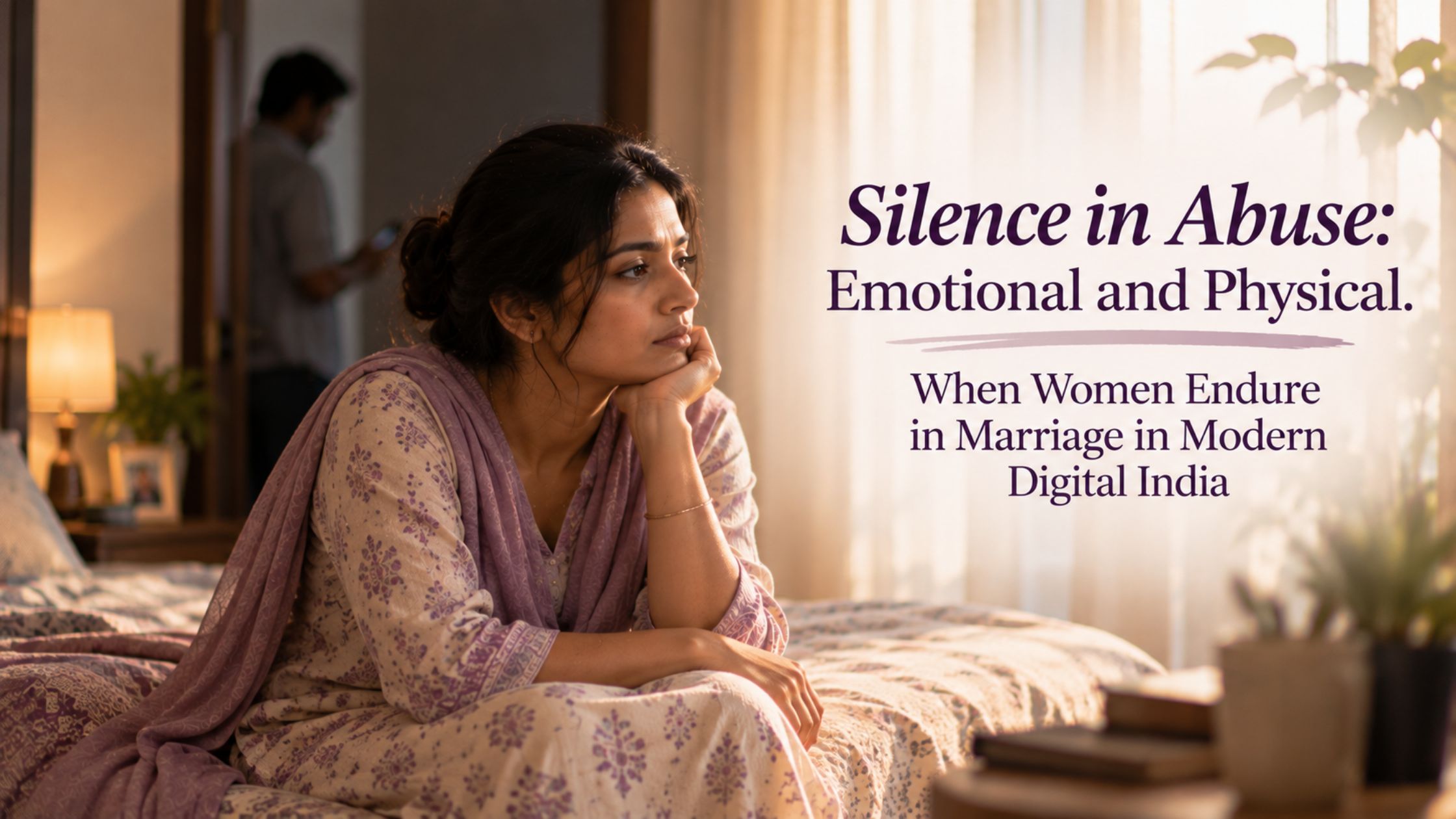
In a world where women are increasingly encouraged to pursue education, build careers, become financially independent, and speak confidently about their aspirations, there remains a difficult reality that is often hidden behind the doors of marriage. Some women who appear confident and capable in public may be living with emotional or physical abuse at home, carrying experiences they find difficult to share even with the people closest to them.
They may attend family gatherings, maintain social relationships, fulfil professional responsibilities, raise children, and participate in everyday life while privately managing fear, humiliation, control, or violence. Their social media profiles may show family celebrations and carefully chosen photographs, while the emotional reality of their marriage remains invisible to everyone watching.
This contrast raises an uncomfortable question about modern India: when women are increasingly encouraged to speak about empowerment, why do some still feel unable to speak about what happens inside their own homes?
Silence in an abusive marriage is rarely as simple as choosing not to talk. It may be shaped by fear of retaliation, concern for children, financial dependence, family expectations, social stigma, or uncertainty about what might happen if the truth becomes known. For some women, the fear is not only of losing a relationship, but also of losing their home, financial security, social standing, or the possibility of continuing their lives on their own terms.
The absence of visible distress does not mean the absence of suffering, and remaining in an abusive marriage does not mean that a woman accepts or deserves the abuse.
The Private Reality Behind the Public Image
Modern digital life has made it easier to share photographs, milestones, celebrations, and personal achievements. Couples may appear happy online, families may present an image of togetherness, and everyday interactions may suggest that everything is well.
Yet, a public image cannot tell us everything about a private relationship.
A woman may hesitate to reveal what happens at home because she fears that people will question her, blame her, or ask why she has not left. She may worry that relatives will dismiss her experience as a normal marital disagreement or insist that she adjust for the sake of family harmony. If her husband is respected within the family or community, she may also fear that her account will not be believed.
Digital visibility can therefore coexist with profound personal isolation. A person may have hundreds of online connections and still feel that there is nobody with whom she can speak honestly about her marriage.
The contrast is particularly painful when public conversations about women's empowerment create an expectation that every woman should be able to stand up for herself without difficulty. Such expectations overlook the complicated circumstances in which abuse may occur.
A woman can be educated, professionally capable, articulate, and socially confident while still experiencing fear within an intimate relationship. Her abilities do not make her immune to coercion, manipulation, or violence, and her outward appearance cannot tell us how safe she feels at home.
Emotional Abuse: When the Harm Is Difficult to Explain
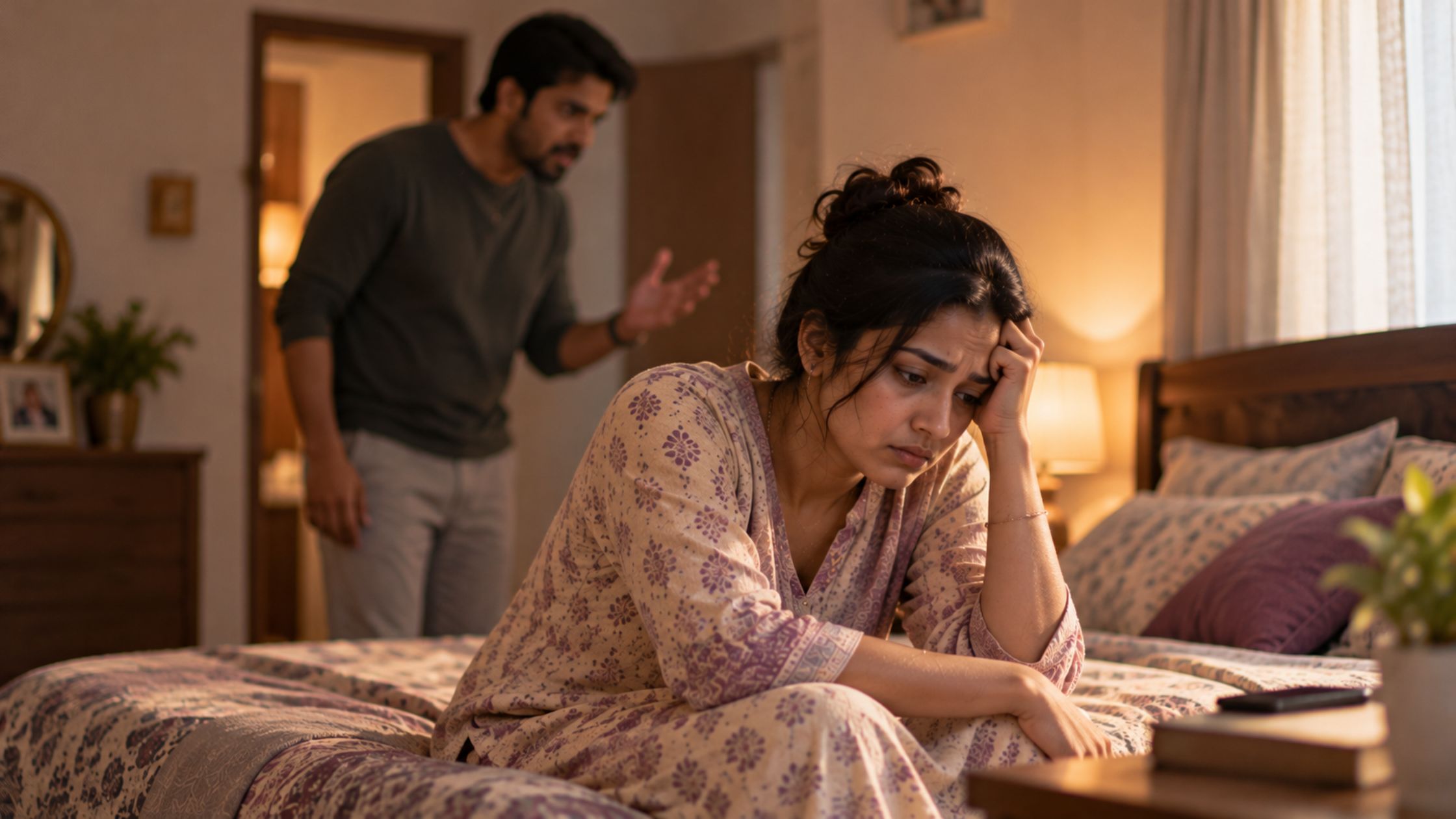
Physical violence can leave visible injuries, although even those may remain hidden. Emotional abuse can be more difficult for others to recognise because its effects may develop through repeated interactions rather than a single observable incident.
It may involve persistent humiliation, insults, intimidation, threats, deliberate degradation, controlling behaviour, or attempts to make a woman doubt her own judgment and worth. In some relationships, a woman may be repeatedly told that she is incapable, ungrateful, irresponsible, or the cause of every disagreement. Her concerns may be dismissed, her achievements belittled, and her feelings treated as evidence that she is too sensitive or unreasonable.
Over time, these experiences can affect the way she sees herself.
She may begin questioning whether her expectations are excessive, whether she is responsible for the conflict, or whether she is entitled to feel hurt. She may spend considerable energy trying to anticipate her partner's reactions, choosing her words carefully, or avoiding subjects that could lead to another argument.
This is one reason emotional abuse can remain hidden for so long. The woman may struggle to explain what is happening because individual incidents appear minor when described separately. The larger pattern, however, can leave her feeling frightened, diminished, or unable to express herself freely.
Disagreement and conflict occur in relationships, but persistent humiliation, intimidation, and controlling behaviour are not simply ordinary marital disagreements. Emotional abuse deserves to be taken seriously even when there are no visible injuries.
Physical Abuse and the Fear That Follows It
Physical abuse can include hitting, slapping, pushing, restraining, choking, or other forms of physical force intended to harm, intimidate, or control a partner. It may occur alongside emotional abuse, although the experiences and circumstances of each relationship differ.
For a woman experiencing physical violence, the consequences may extend beyond the immediate injury. She may become increasingly alert to changes in her partner's mood, footsteps, tone of voice, or behaviour because she is trying to anticipate when another incident might occur.
Ordinary situations can acquire a different meaning. A disagreement that another person might regard as manageable may feel dangerous to someone who knows that arguments have previously led to violence. Silence, compliance, or withdrawal may become ways of trying to reduce immediate risk.
This context matters when considering why a woman does not speak openly or leave immediately. What appears to be passivity from the outside may be an attempt to navigate a situation in which she fears the consequences of resisting.
The World Health Organization recognises intimate partner violence as including physical aggression, sexual coercion, psychological abuse, and controlling behaviours. Such experiences can affect both physical health and mental well-being, including increasing the risk of anxiety and depression. (WHO, Violence Against Women.)
Violence is not made acceptable by marriage, anger, family expectations, or a disagreement. Nor is a woman responsible for preventing another person's decision to harm her.
Why Does She Stay Silent?
There is rarely one explanation for why a woman remains silent about abuse. Her circumstances may involve several interconnected pressures, and these pressures can change over time.
She may fear that speaking will lead to further violence. She may depend on her husband or extended family for housing, money, childcare, or other necessities. She may worry about the effect of separation on her children or fear losing daily contact with them. She may also be concerned about social judgment, family reputation, or being treated as the person who failed to preserve the marriage.
In some families, women are repeatedly told that marriage requires sacrifice, patience, and adjustment. These values can be meaningful when they describe mutual care and compromise, but they become harmful when they are used to demand that a woman tolerate violence or surrender her safety.
A woman may also hope that her partner will change. She may remember earlier periods of the relationship, care about her family, or feel uncertain about what life outside the marriage would involve. Recognising abuse does not automatically resolve the practical, emotional, and social difficulties involved in responding to it.
This is why asking, “Why doesn't she just leave?” can be an unfair way to approach the subject. It places the burden of explanation on the woman rather than examining the conditions that may restrict her choices.
A more compassionate question is whether she has access to safety, reliable information, practical resources, and people who will take her experience seriously without forcing her into decisions she is not ready or able to make.
When Family Reputation Becomes More Important Than Her Safety
In some families, maintaining the appearance of a successful marriage can become a powerful expectation. Relatives may discourage a woman from discussing private matters, suggest that every marriage has problems, or insist that she tolerate difficult behaviour to protect the family's reputation.
The intention may be described as preserving the family, protecting children, or avoiding public embarrassment. But when preserving appearances requires a woman to conceal violence or endure repeated humiliation, the cost of that silence falls disproportionately on her.
Family support can make an enormous difference when it allows a woman to speak without being immediately judged. Unfortunately, if the first response she receives is blame, disbelief, or pressure to reconcile, she may become less willing to seek help again.
Children can also complicate these decisions. A mother may worry about their emotional well-being, living arrangements, education, or financial security. These concerns deserve careful consideration rather than dismissal. At the same time, maintaining the appearance of an intact family does not guarantee that children are unaffected by violence or persistent fear within the home.
The goal should not be to preserve a marriage at any cost. It should be to protect the safety, dignity, and well-being of the people living within it.
Modern India and the Contradiction of Women's Empowerment
Conversations about women’s empowerment increasingly include education, employment, financial independence, leadership, and equal participation in society. These are important developments, but public progress does not automatically eliminate private restrictions.
A woman may have a degree, a career, a bank account, and an active social life while still having limited freedom within her marriage. She may be able to make professional decisions but feel unable to question her husband's behaviour. She may earn an income but fear that speaking about abuse will threaten her housing, family relationships, or continued access to financial resources.
Independence is not simply a matter of having the capacity to make decisions. It also involves having meaningful opportunities to exercise those decisions without intimidation or coercion.
The digital world adds another layer to this contradiction. Information about legal rights, mental health, and support services may be more accessible than it once was, yet access to information does not automatically create the safety or resources needed to act on it. A woman may know that abuse is unacceptable and still feel uncertain about how to respond within her particular circumstances.
It is important not to assume that all women in India face the same barriers, or that all marriages operate in the same way. Experiences differ according to individual circumstances, family relationships, economic resources, and access to support.
What remains important across these differences is the recognition that empowerment must include the ability to live without violence and to seek help without being shamed for doing so.
What Silence Can Do to Emotional Well-Being
Living with abuse can require a woman to remain continually attentive to her surroundings and her partner's reactions. She may spend time anticipating conflict, suppressing her feelings, or trying to prevent situations that could become unsafe.
This constant emotional effort can leave little room for rest.
Some women may experience persistent worry, difficulty sleeping, sadness, irritability, reduced confidence, or a sense of emotional numbness. Others may struggle to trust their own judgment or find it difficult to explain what they are experiencing. These responses vary, and not every woman will experience them in the same way.
When a person repeatedly receives the message that her feelings do not matter, she may gradually stop expressing them. When her concerns are dismissed often enough, she may hesitate even in situations where speaking would be appropriate. The silence that began as a way of avoiding conflict can become a pattern that affects her relationships and sense of self.
The World Health Organization has documented the significant mental health consequences associated with intimate partner violence, including depression, anxiety, and other forms of psychological distress.
Understanding these effects does not mean treating a woman's distress as the central problem while ignoring the abuse that may be causing it. Support must recognise the circumstances she is living in, not simply encourage her to become more resilient within them.
She should not have to develop better coping skills in order to tolerate violence. She deserves support in addressing the violence itself and protecting her well-being.
Breaking the Silence Does Not Have to Begin With a Public Disclosure
When people discuss breaking the silence around abuse, they sometimes imagine a woman making a public statement, confronting her partner, or immediately leaving the marriage. In reality, seeking help can begin in quieter and more private ways.
It may begin with acknowledging to herself that what is happening is not acceptable. It may involve speaking to one trusted person who will listen without judgment, consulting a qualified professional, or learning about available support services and legal options.
If a woman is concerned that her partner monitors her phone, messages, location, or internet activity, she may need to consider digital privacy before searching for help or contacting someone. Using a safer device or seeking assistance through a trusted person may be appropriate where possible. Any safety planning should be guided by her circumstances, particularly if discovery could increase the risk of harm.
There is no single path that will be right for every woman. Some may be ready to seek immediate protection, while others may need time to understand their options and plan around practical constraints. The absence of immediate action should not be mistaken for consent to abuse.
For anyone in immediate danger in India, emergency assistance is available through 112. The Government of India's Women Helpline, 181, provides support and referrals for women experiencing violence or distress, including connections to relevant services and One Stop Centres where available. A trusted local service or qualified legal professional can also help explain options based on the woman's circumstances.
Seeking support should not require a woman to prove that she has suffered enough. Her safety and dignity matter before a situation becomes visible to others.
How Families and Communities Can Respond Differently
Breaking the silence around abuse requires more than asking women to speak up. It also requires creating conditions in which they can speak without automatically being blamed, disbelieved, or pressured to protect the family image.
When a woman discloses abuse, the first response matters. Listening calmly, acknowledging the seriousness of what she has shared, and asking what kind of support she needs can be more helpful than immediately questioning her decisions or insisting that she take a particular course of action.
Families can help by taking threats and violence seriously, respecting her privacy, and avoiding pressure to reconcile simply to restore social harmony. Friends and colleagues can provide practical support by helping her access reliable information, professional services, or safe accommodation when appropriate and wanted.
Professionals who work with women also need to recognise that emotional distress may be connected to ongoing abuse. A survivor-centred response considers her safety, circumstances, choices, and needs rather than treating the experience as an ordinary relationship problem.
At SoulNirvana, psychological support can offer a confidential space to explore the emotional impact of abusive experiences, rebuild a sense of self, and consider available sources of support. Such support should be sensitive to safety and the realities of the woman's situation; psychological counselling is not a substitute for emergency protection, and abuse should never be framed as a problem that a woman alone must solve through better communication.
The responsibility for abuse belongs to the person choosing to engage in abusive behaviour. Support can help a woman understand her experience and consider her options, but it should never imply that she caused the abuse or must change herself to prevent it.
Conclusion: A Marriage Should Not Require a Woman to Disappear
Silence in an abusive marriage is often surrounded by explanations about adjustment, family honour, children's futures, financial security, and the importance of keeping relationships together. These concerns may be deeply significant to a woman, and they should not be dismissed as though responding to abuse were always simple.
But none of them makes emotional or physical abuse acceptable.
A woman should not have to hide her pain to protect a family's reputation, question her own worth to preserve a relationship, or remain silent because she fears that speaking will make her circumstances more difficult. She deserves to be heard without judgment and to have access to support that respects both her safety and her choices.
Modern India can speak about women's empowerment in public, but that conversation remains incomplete if women cannot seek safety and dignity within their own homes. Real progress includes not only the freedom to study, work, earn, and participate in society, but also the freedom to live without intimidation and to ask for help when that freedom is threatened.
At SoulNirvana, the aim of psychological support is to create space for people to be heard with care and without judgment. For women living with abuse, that recognition can be an important part of finding support and understanding their options, while remembering that they are not responsible for the violence they experience.
A woman's silence should never be treated as proof that everything is fine. Sometimes, it is a sign that she has not yet found a safe place to speak.
FAQs
1. Why do some women remain silent about abuse in marriage?
Fear of retaliation, financial dependence, concerns about children, family pressure, social stigma, and uncertainty about available options can all make disclosure difficult. Each woman's circumstances are different, and remaining silent does not mean she accepts or deserves the abuse.
2. Is emotional abuse as serious as physical abuse?
Emotional abuse can cause significant psychological harm, even when there are no visible injuries. Persistent humiliation, intimidation, threats, and controlling behaviour deserve to be taken seriously.
3. Can abuse happen in educated and financially secure families?
Yes. Abuse can occur across educational, economic, cultural, and social backgrounds. Education and financial resources may provide options, but they do not guarantee safety within an intimate relationship.
4. What can someone do if she is experiencing abuse at home?
If she is in immediate danger in India, she can contact emergency services at 112. She may also contact the Women Helpline at 181, seek support from a trusted person, or consult an appropriate professional service to understand safety and legal options.
5. How can family members support a woman experiencing abuse?
They can listen without blaming her, take her concerns seriously, respect her privacy, and help her access support according to her needs. Pressuring her to remain silent or reconcile for the sake of family reputation can deepen her isolation.
References
- World Health Organization. Violence Against Women. https://www.who.int/health-topics/violence-against-women
- World Health Organization. Preventing Intimate Partner Violence Improves Mental Health. https://www.who.int/news/item/06-10-2022-preventing-intimate-partner-violence-improves-mental-health
- Ministry of Women and Child Development, Government of India. Women Helpline 181. https://wcd.gov.in/women/help