
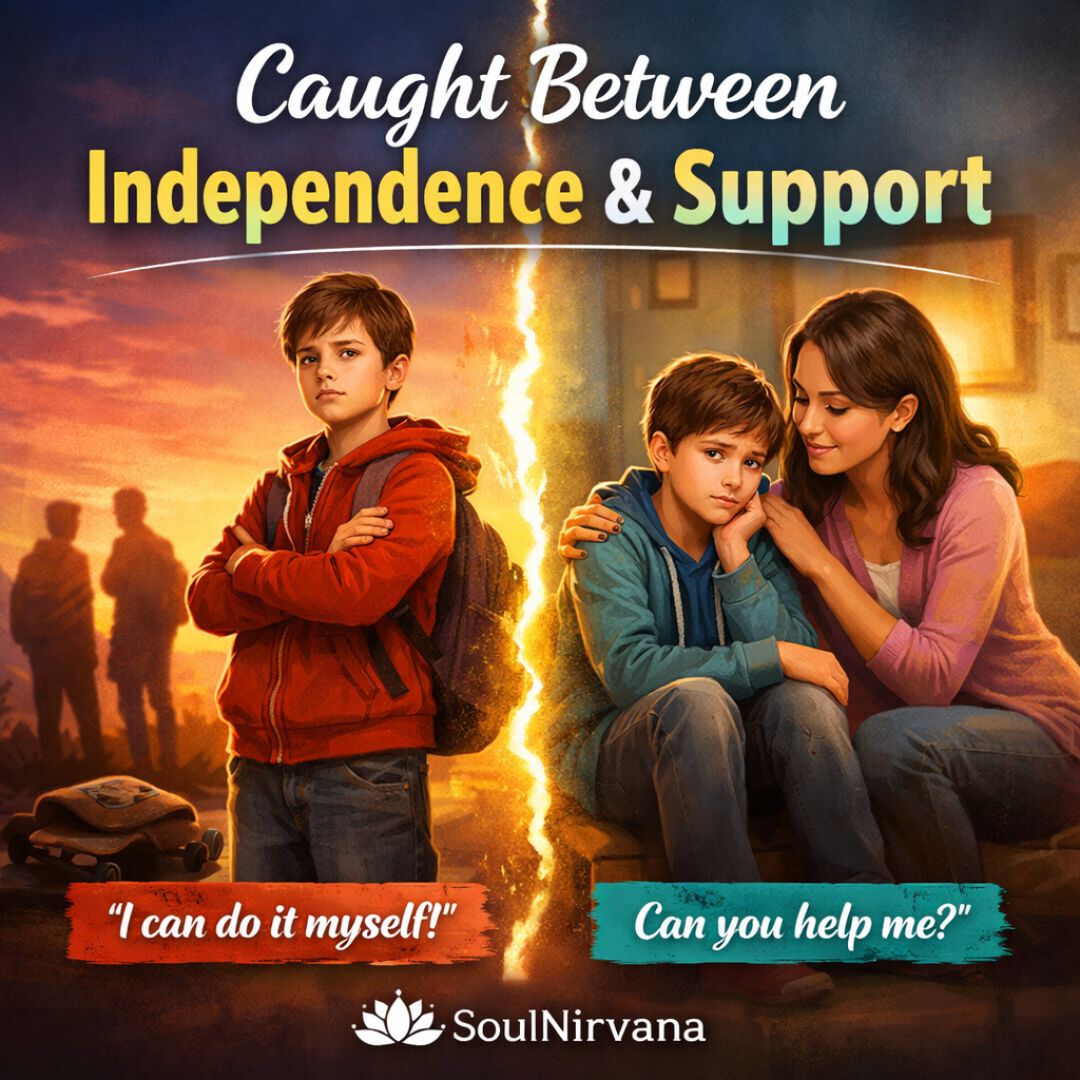
Imagine a 10-year-old saying, “I can handle this myself,” and then a few minutes later asking for help. They want to decide what to wear, who to play with, and how to spend their time. At the same time, they still want reassurance, comfort, and guidance. That feeling of wanting independence but not feeling ready for it is very common during the tween years.
This happens because tweens are living in an in-between stage. They are no longer little children, but they are not teenagers yet either. This blog walks you through why tweens feel stuck in this “almost” space, why rules feel frustrating, why freedom feels confusing, and how adults can support them through it.
What Happens Inside a Tween’s Mind
As children move into the ages of around 9 to 12, their thinking starts to change. They begin to reason better, notice fairness, and understand situations more clearly. Their opinions start to feel important to them.
At the same time, the parts of the brain that help manage strong emotions and handle responsibility are still developing. Because of this, tweens may think they are ready for freedom, but feel overwhelmed when things don’t go as planned.
This mix can lead to confusion, frustration, and emotional ups and downs.
Why Tweens Feel Too Old for Rules
Rules that once felt normal can suddenly feel irritating.
Tweens start to think, “I understand what’s going on,” or “I know better now.” They want their thoughts and feelings to be taken seriously.
When rules are given without explanation, tweens may feel controlled rather than guided. They may feel treated younger than they feel inside.
This doesn’t mean they want no rules.
It means they want to be respected and trusted more.
Why Tweens Still Feel Too Young for Full Freedom
Even though tweens ask for independence, full freedom can feel scary.
Many tweens still:
- struggle with managing strong emotions
- need help making decisions
- feel unsure when things go wrong
- want adults to step in during difficult moments
Too much freedom without support can feel overwhelming rather than empowering. This is why tweens may ask for space but react strongly when limits disappear.
The Push and Pull of Being “Almost”
For tweens, many things are happening for the first time:
- First big responsibilities
- First deeper friendships
- First strong disagreements
- First sense of identity
Because so much is new, tweens often move back and forth emotionally. One day they want independence. The next day they want comfort.
This back-and-forth is a normal part of growth.
How This Shows Up in Daily Life
Adults often notice:
- Arguments over rules that were never a problem before
- Statements like “You don’t trust me”
- Wanting independence without responsibility
- Strong reactions to small limits
- Needing space and attention at the same time
When adults see this behaviour, it helps to ask:
Is this about breaking rules?
Or is this about growing and figuring things out?
What Healthy Growing Looks Like at This Age
Here are signs that a tween is growing in a healthy way, rather than struggling:
The child wants to try new responsibilities but still checks in with adults.
They ask questions about rules instead of blindly breaking them.
They feel upset when limited but can calm down with reassurance.
They learn from small mistakes rather than repeating unsafe behaviour.
What Adults (Parents/Educators) Can Do
If you’re a parent, teacher, or someone supporting a tween, here are helpful ways to respond:
- Explain rules instead of only enforcing them.
- Offer small choices so tweens can practice independence safely.
- Stay available even when giving space.
- Talk about mistakes as learning moments, not failures.
- Balance freedom with regular check-ins so the child knows support is nearby.
When to Be Alert
Most of the time, this “almost” stage is a normal part of development. But extra attention is needed when:
- The child shows constant emotional distress.
- There are repeated power struggles with no improvement.
- The child withdraws completely or stops communicating.
- Rules and freedom both trigger extreme reactions.
- In these cases, extra support can help guide both the child and the adults.
Support and Guidance
If this stage feels more stressful than manageable, support from someone who understands child development can help. A structured support program for parents and children can help balance independence and guidance during this phase.
Conclusion
Tweens are not being difficult on purpose. They are growing, learning, and standing between childhood and adolescence. Their minds want independence, while their emotions still need safety.
With patience, understanding, and the right support, this stage can help tweens build confidence rather than confusion.
If you’re a parent or caregiver and things feel overwhelming, you don’t have to figure it out alone. SoulNirvana offers a safe, supportive space for families to understand this phase and grow together. Book a session now.
FAQs
Q1. Why do tweens want independence but still need help?
A: Because their thinking abilities are growing faster than their emotional regulation. This mismatch is normal.
Q2. Why do rules suddenly become a big issue?
A: Tweens are developing identity and autonomy, so rules start to feel personal.
Q3. How much freedom should tweens have?
A: Small, guided freedom with support works better than complete control or complete freedom.
Q4. When should parents seek extra help?
A: When daily life feels tense, communication breaks down, or emotional distress continues
References
Eccles, J. S., & Roeser, R. W. (2011). Schools as developmental contexts during adolescence. Journal of Research on Adolescence, 21(1), 225–241.
https://onlinelibrary.wiley.com/doi/10.1111/j.1532-7795.2010.00725.x
Steinberg, L. (2014). Age of Opportunity: Lessons from the New Science of Adolescence. Houghton Mifflin Harcourt.
https://www.goodreads.com/book/show/18209834-age-of-opportunity
American Psychological Association. (2020). Understanding the teen brain.
https://www.apa.org/monitor/2012/11/teen-brain
UNICEF. (2022). Adolescence and emotional development.
https://www.unicef.org/parenting/child-development/adolescence
Blakemore, S. J. (2018). Inventing Ourselves: The Secret Life of the Teenage Brain. PublicAffairs.
https://www.publicaffairsbooks.com/titles/sarah-jayne-blakemore/inventing-ourselves/9781610399382/