
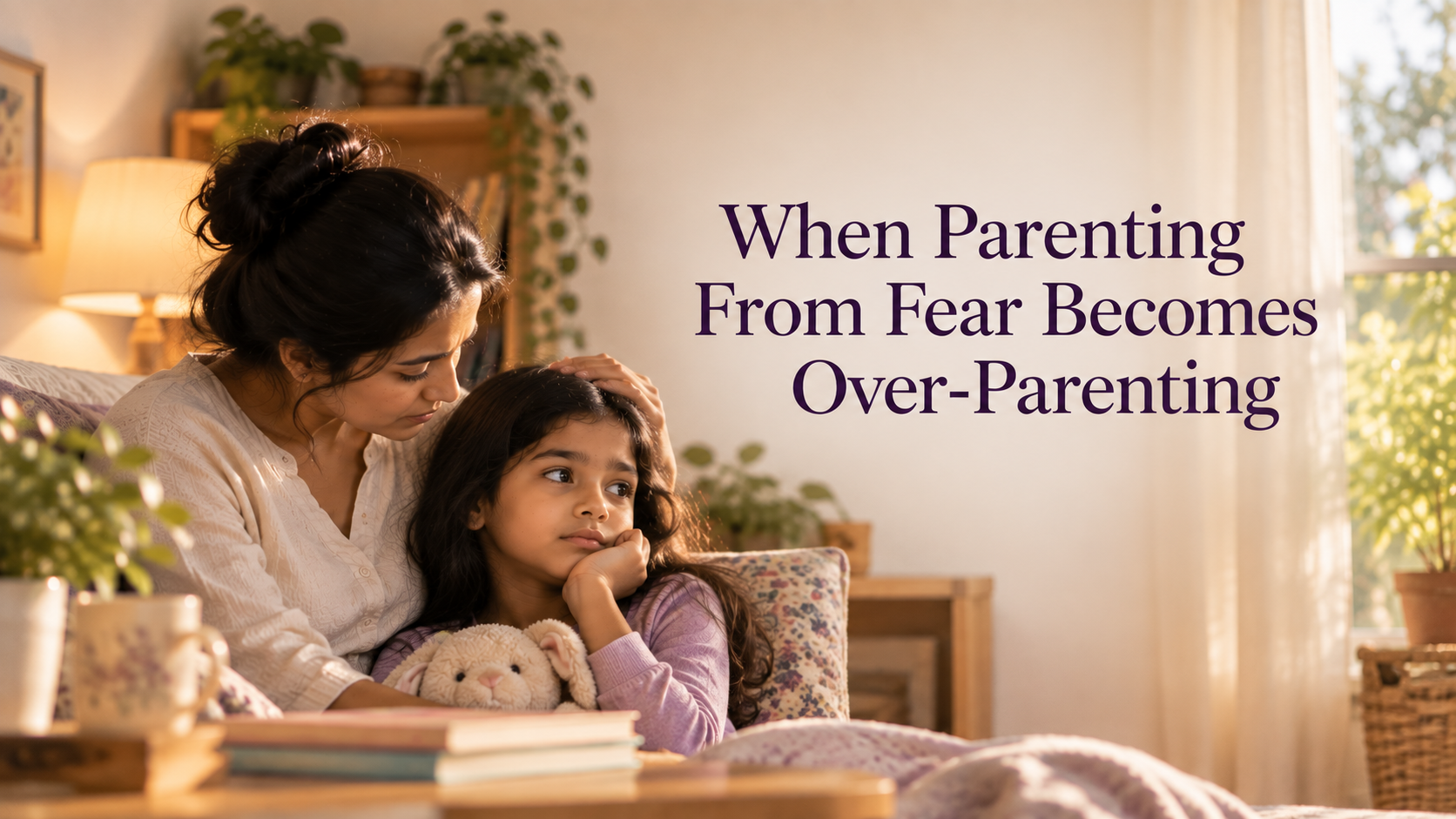
Parenting is full of hopes. Parents hope their children will feel secure, become resilient, discover their interests, build meaningful relationships, and grow into themselves with confidence. But alongside those hopes, there are fears: fear that something may go wrong, that a child may struggle, that a mistake may have lasting consequences, or that something important may be missed.
Fear is a natural part of caring for a child. The difficulty begins when fear starts directing everyday parenting more strongly than trust does.
A parent may begin watching more closely, asking more questions, explaining more, correcting more quickly, or stepping into situations that a child might otherwise learn to navigate independently. What begins as protection can gradually become over-involvement. The child receives care, but may have less room to experience their own abilities, make sense of ordinary difficulties, or simply be themselves.
Simplicity parenting offers another way of looking at this tension. Protecting childhood does not mean removing every uncertainty from it. It means creating an environment in which children can experience dependable care without having the adult world constantly hovering over them.
When Fear Starts Shaping the Way We Parent
Parents naturally worry. A child’s well-being matters deeply, and uncertainty can make that responsibility feel heavy. It is understandable to want to anticipate problems before they happen and to prevent difficulties wherever possible.
But fear can quietly change the way a parent interacts with a child.
Instead of allowing a child to remain absorbed in play, a parent may repeatedly check what they are doing. Instead of allowing a small difficulty to unfold, the parent may immediately step in. Instead of waiting for a child to share something, the parent may keep asking questions in an attempt to understand exactly what is happening.
These actions may come from concern rather than control. Yet, when they happen constantly, they can leave very little space between the child and the parent.
The central challenge of parenthood is not simply choosing between caring and not caring. It is learning how to let hopes for a child outweigh fears about what might happen.
The Difference Between Being Available and Hovering
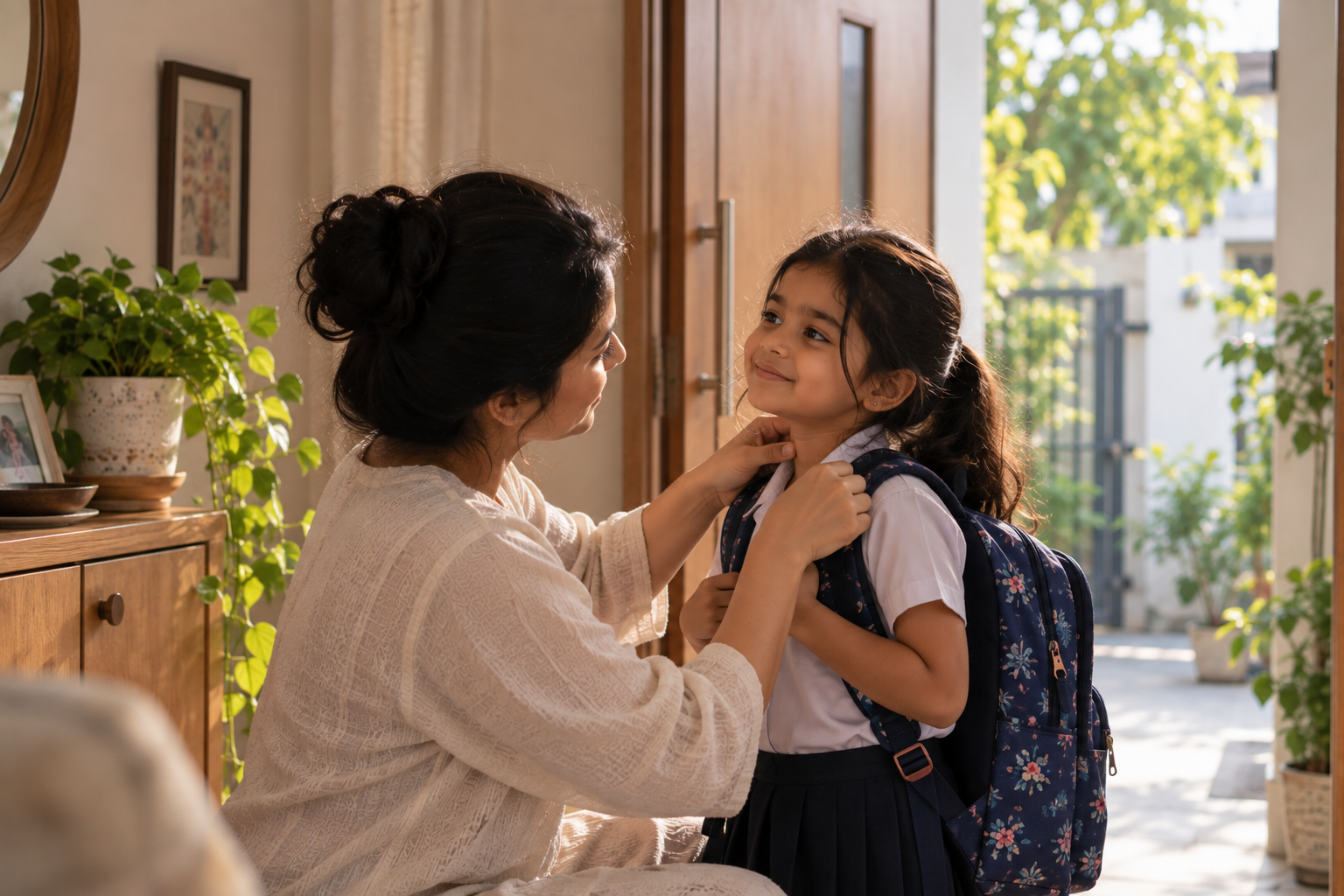
Children need parents who notice them. They need to know that when something is wrong, someone will respond. Emotional security grows when children experience themselves as known, cared for, and supported.
Being available, however, does not require being involved in every moment.
A parent can be present without directing every activity. A child can play while the parent remains nearby without continually commenting on the game. A child can experience a small frustration without immediately receiving a solution. A child can have a private thought, a changing interest, or a moment of uncertainty without needing to explain it immediately.
Hovering often comes from the belief that constant involvement is necessary for good parenting. But children also need experiences in which they can discover something without an adult standing over the process.
There is a difference between being there when needed and making oneself necessary at every moment.
That difference can create valuable space for independence.
When Protection Becomes Over-Involvement
Protection is an important part of childhood. Children need adults to filter aspects of the adult world, provide appropriate boundaries, and respond when their well-being is threatened.
But protection can become complicated when parents begin managing experiences that children could reasonably encounter on their own.
A parent who is constantly monitoring may unintentionally communicate that the child cannot be trusted to handle ordinary situations. A parent who immediately intervenes may prevent the child from discovering that they can work through small difficulties. A parent who continually anticipates problems may make the world feel more dangerous than it needs to feel.
This does not mean that children should simply be left to manage everything themselves. The document’s emphasis is on balance: children need dependable care, while parents also need to allow room for the child’s own development.
Independence does not appear because parents suddenly withdraw. It develops gradually within relationships where children know that support exists without having to be directed at every moment.
Sometimes, Saying Less Creates More Space
One of the quieter forms of over-parenting is constant talking.
Parents may explain, question, advise, remind, interpret, and correct because they want to help children understand themselves and the world around them. Conversation can certainly be part of connection, but there can also be a point at which more words create less listening.
When adults are constantly explaining what a child should think, feel, notice, or do, there may be little space for the child to discover their own response.
Listening requires something different. It means allowing pauses, noticing what a child chooses to share, and resisting the urge to fill every silence with another question or explanation.
The document captures an important principle: the more an adult talks, the less they may sometimes be listening.
A quieter parental presence does not mean emotional distance. It can mean becoming more attentive to the child rather than constantly directing the interaction.
Children Need Room Around Their Feelings
Parents naturally want to understand what their children are experiencing. When a child is upset, worried, angry, withdrawn, or unusually quiet, it can be difficult for a parent not to immediately search for an explanation.
Sometimes, however, children need room for an experience to unfold before it is interpreted.
Not every feeling needs an immediate discussion. Not every change in mood needs a series of questions. Not every difficult moment needs to become a conversation about what happened and why.
A child may need closeness, quiet, time, or simply the reassurance that a parent is nearby.
This is particularly important when a child is overwhelmed. The document emphasises that when a child's well-being is threatened, routines may need to be suspended and the child may need to be brought close, watched, and cared for.
The response is therefore not always more words or more intervention. Sometimes, it is presence.
The Adult World Does Not Need to Fill Childhood
Parents carry concerns that children do not need to carry. Worries about the future, frightening information, adult conflicts, constant media exposure, and the pressures of the wider world can gradually enter family life.
Children absorb more than adults explicitly tell them. They can notice emotional tension, urgency, fear, and worry within their surroundings.
This does not mean parents need to hide the reality of life or create an artificial world where nothing difficult exists. It means that children deserve protection from unnecessary exposure to concerns that belong to the adult world.
Technology can make this boundary particularly difficult. Screens and media can bring information, fear, comparison, and adult concerns into a child's environment continuously. Reducing that saturation can create a calmer atmosphere in which childhood has more room to remain childhood.
A parent does not need to share every worry in order to be honest. Sometimes, protecting childhood means deciding which concerns genuinely need to enter the child's world.
Trust Does Not Mean Assuming Everything Will Go Perfectly
Trusting a child does not mean believing that they will always make the right choice or that difficulties will never occur.
Children will struggle. They will become frustrated, make mistakes, change their minds, and encounter experiences that parents cannot completely control. The role of a parent is not to eliminate all of these moments.
Trust can instead mean believing that a child can gradually develop through experience while knowing that support remains available.
This is where the relationship between protection and independence becomes important. A child who knows that a parent will respond when something is genuinely wrong does not need the parent to be present in every small moment.
The parent becomes a secure presence rather than a constant supervisor.
That distinction can make the relationship feel less crowded. The child has room to explore, while the parent remains attentive to what truly requires attention.
A Calmer Parent Can Create a Calmer Home
The emotional atmosphere of a family is shaped by more than routines and physical surroundings. Parents themselves are part of the environment children experience.
When parenting is driven by constant worry, the home can begin to feel as though something is always about to go wrong. Questions become frequent, supervision becomes intense, and ordinary situations can acquire unnecessary urgency.
A calmer approach does not require parents to stop worrying. It involves becoming more aware of when fear is shaping their response.
Instead of immediately intervening, a parent might pause. Instead of asking another question, they might listen. Instead of filling a quiet moment, they might allow it to remain quiet. Instead of assuming that every difficulty needs to be solved immediately, they might observe whether the child needs help or simply needs time.
These are small shifts, but they can change the emotional quality of family life.
Calm does not come from controlling everything that happens. It can come from knowing when to act, when to stay close, and when to step back.
Letting Hopes Become Stronger Than Fears
Parenting inevitably involves uncertainty. There will always be things parents cannot predict or control. Fear may never disappear completely because caring deeply for a child naturally makes the possibility of difficulty feel significant.
The challenge is not to become a parent who never worries. It is to avoid allowing worry to become the organising principle of family life.
Hopes can offer a different direction.
A parent may hope their child develops confidence, resilience, curiosity, independence, and a sense of belonging. Those qualities need room. They cannot be created entirely through monitoring or constant intervention.
Sometimes, supporting a child's growth means creating an environment where they can experience ordinary life without being continually watched, questioned, corrected, or protected from every uncertainty.
The child still needs the parent. But they also need enough space to discover themselves.
Conclusion
Good parenting is not measured by how closely a child is monitored or how quickly a parent responds to every small difficulty. Children need protection, but they also need room. They need to know that someone will notice when something is wrong, while also experiencing the freedom to play, explore, think, and gradually become more independent.
The movement from fear toward trust is not about stepping away from a child. It is about becoming more thoughtful about when closeness is needed and when space can be equally valuable.
Sometimes the most supportive parental presence is not the one that says the most, asks the most, or intervenes the fastest. It is the one that remains available without taking over.
At SoulNirvana, the Parenting Support Program offers parents a space to reflect on the fears, expectations, and patterns that can shape their everyday responses to their children, while exploring ways to build a home environment where care and independence can exist together.
FAQs
What is over-parenting?
Over-parenting can involve excessive monitoring, involvement, questioning, or intervention in a child's everyday experiences. It can develop when parental fear begins to leave little room for the child's own exploration and independence.
Does giving children space mean becoming less caring?
No. Children still need parents to notice when something is wrong and respond with care. Giving space means allowing children appropriate opportunities to experience, explore, and develop without unnecessary intervention.
Why can parents become overly involved?
Fear and worry can make parents feel that they need to anticipate and prevent every possible difficulty. This can gradually lead to hovering or constant involvement even when a child may benefit from more independence.
Can talking too much affect the parent-child relationship?
Constant questioning, explaining, or advising can sometimes leave less room for listening. A quieter presence can give children more space to express themselves naturally and experience their own thoughts.
How can parents create more room for independence?
Parents can begin by noticing when intervention is genuinely needed and when a child may simply need time to work through an ordinary experience. Staying available while allowing appropriate space can support both security and independence.