
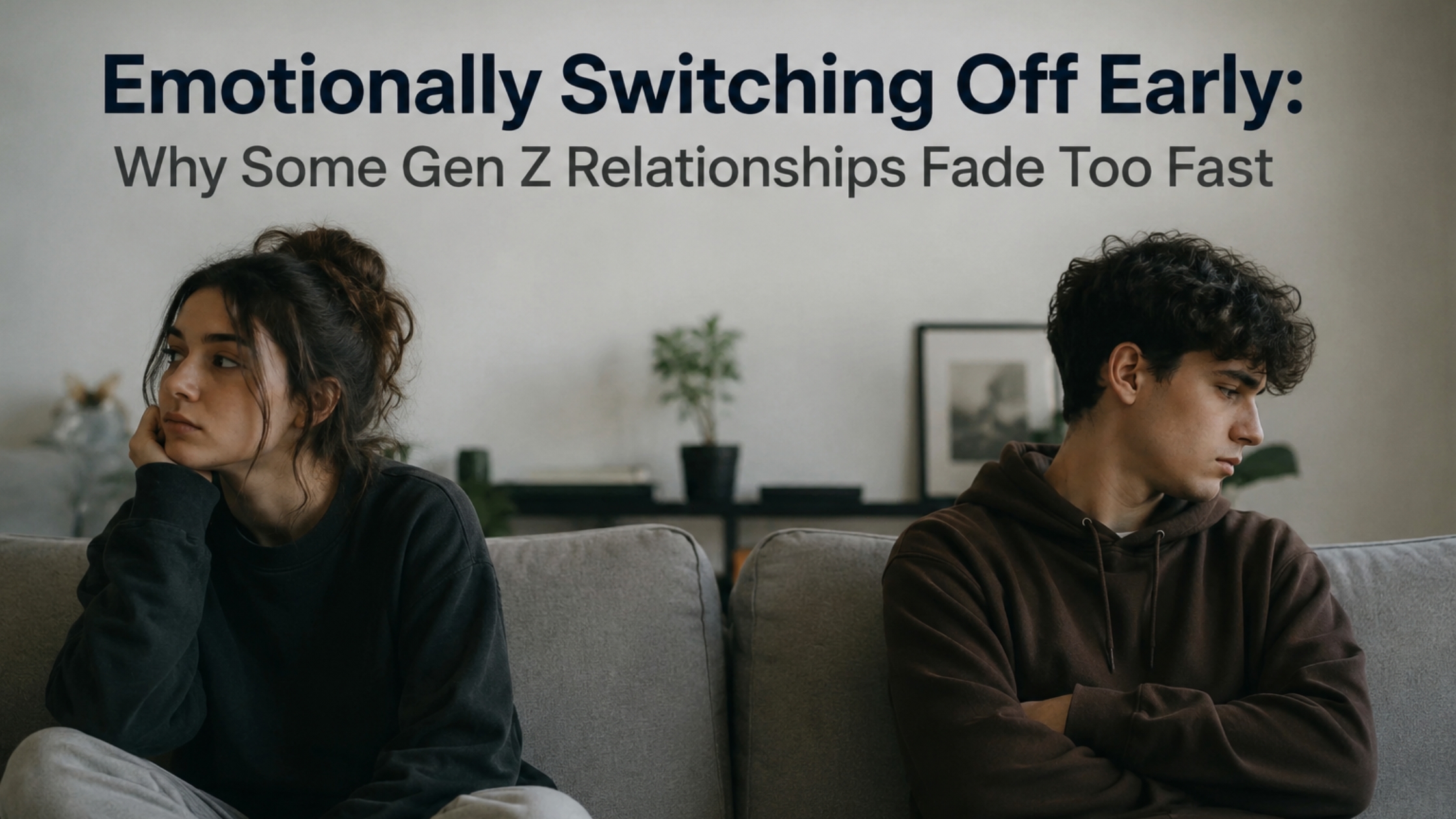
Many relationships today don’t end with a big fight.
Instead, they slowly lose emotional presence. Conversations become shorter. Replies feel colder. Interest fades quietly. One person starts feeling like they are carrying the emotional weight of the relationship alone.
What makes this confusing is that the disconnection often happens very early—sometimes even before the relationship has fully settled into stability.
For many Gen Z couples, emotional burnout and disconnection are becoming common experiences. This blog explores why some relationships lose emotional depth so quickly, and what may be happening underneath the surface.
Why Relationships Start Intensely Today
Modern relationships often move emotionally fast. People open up quickly, communicate constantly, and form emotional closeness within days or weeks. Messaging creates continuous connection, and emotional intimacy develops before real-life compatibility is fully understood.
At first, this intensity feels exciting. It creates a sense of closeness very quickly. But intensity and emotional sustainability are not the same thing.
The Problem With Fast Emotional Attachment

When emotional connection builds too quickly, people sometimes skip the slower process of truly knowing each other.
The relationship becomes emotionally consuming before it becomes emotionally stable. As reality slowly replaces excitement, the emotional energy that held the connection together begins to drop.
This is often mistaken for:
- “I lost feelings.”
- “Maybe this wasn’t real.”
Sometimes, it’s not lack of care. It’s emotional exhaustion arriving early.
Why Gen Z Feels Emotionally Burnt Out So Quickly
Gen Z is emotionally stimulated almost constantly.
There is ongoing exposure to:
- conversations
- notifications
- emotional content
- relationship advice
- comparisons
- social expectations
Because of this, many people already feel mentally overloaded before entering relationships. Then relationships themselves become another space requiring emotional energy, reassurance, communication, and attention. Over time, emotional fatigue builds quietly.
The Fear of Commitment Hidden Under “Losing Interest”
Sometimes emotional withdrawal is actually fear. As relationships deepen, emotional expectations increase:
- vulnerability
- consistency
- long-term planning
- accountability
- emotional responsibility
For individuals still figuring out identity, independence, or emotional stability, this can feel overwhelming. Switching off emotionally can become a way to avoid the discomfort of deeper commitment.
Why Attention Span Impacts Relationships Too
Modern digital culture affects emotional patience. People are used to constant novelty, new content, new conversations, new stimulation. Relationships, however, require repetition, steadiness, and emotional maintenance.
Once the initial excitement fades, some individuals struggle with the quieter stages of connection. Stability may feel “boring” simply because the nervous system has become used to constant stimulation.
The issue is not lack of love. Sometimes it’s difficult to tolerate emotional steadiness.
The Difference Between Calm and Disconnection
Healthy relationships naturally become calmer over time. But many people mistake calmness for loss of chemistry because they associate love only with intensity. This can create confusion:
- “Why doesn’t it feel exciting anymore?”
- “Shouldn’t love always feel intense?”
In reality, emotional safety often feels quieter than emotional chasing. Learning the difference between peace and emotional numbness is important.
How Avoidance Shows Up in Modern Relationships
Emotional switching off is often gradual.
Some people become emotionally unavailable without directly expressing it. They avoid difficult conversations, reduce emotional effort, or stay physically present while emotionally distant.
This avoidance is not always intentional cruelty. Often, it reflects discomfort with emotional responsibility or fear of emotional dependency.
What Helps Relationships Last Emotionally
Long-term connection requires more than attraction. Relationships tend to feel healthier when people:
- pace emotional intimacy
- communicate honestly
- allow individuality alongside closeness
- tolerate uncomfortable conversations
- understand that connection changes form over time
Sustainable relationships are built through consistency, not constant intensity.
The Bigger Picture
Gen Z relationships are happening in a culture of speed, overstimulation, and emotional overload.
People want deep connection, but many are also emotionally exhausted, uncertain about commitment, and afraid of losing themselves within relationships. This creates a cycle of intense beginnings followed by early emotional withdrawal.
The challenge is not a lack of desire for love. It’s learning how to stay emotionally present once the excitement settles.
Conclusion
When someone emotionally switches off early in a relationship, it’s not always because the connection meant nothing.
Sometimes it reflects burnout, fear, overstimulation, or confusion about what healthy love actually feels like. Understanding these patterns can help relationships become less reactive and more emotionally grounded.
If you’re struggling with emotional distance, confusion in relationships, or fear of commitment, SoulNirvana offers support through its Couple Counseling and Assessment services. If it feels right, you can book a session now and begin exploring relationships with greater emotional clarity and stability.
FAQs
Q1. Why do some relationships lose emotional intensity so quickly?
Because early emotional intensity is not always emotionally sustainable long-term.
Q2. Is emotional withdrawal always intentional?
No. It can reflect burnout, fear, avoidance, or emotional overwhelm.
Q3. Why does stability sometimes feel boring?
Because many people become used to emotional highs and constant stimulation.
Q4. Can emotionally distant relationships improve?
Yes. Honest communication, pacing, and emotional awareness can help rebuild connection.
References
American Psychological Association. Relationship patterns and emotional regulation.
Esther Perel. Modern intimacy and emotional connection.
Pew Research Center. Young adults and modern relationship dynamics.
World Health Organization. Mental well-being and emotional health in young adults.